Back in May 2020, there was a bit of a scandal in the UK when a high-level government adviser seemingly broke COVID lockdown rules to drive to Barnard Castle.
His reasoning behind the trip was that he wanted to get his eyesight tested. At the time, we were in the US and I wasn’t following this story particularly closely, but I thought that it was weird that he’d go to a castle to get his eyes tested.
Well, fast forward five years and Shae, Truffles and I are back in the UK (here’s why). We’re renting a property up north and Barnard Castle happens to be a 10 minute drive from where we now live. What I hadn’t realized until we moved here is that Barnard Castle isn’t only a castle; it’s the name of a market town too, which explains why someone would be able to get their eyes tested there!
We’ve made a few trips into the town since moving here, but hadn’t actually checked out the castle until yesterday. It’s run by English Heritage, so before visiting we bought an annual membership as we figured we’d visit the castle more in the future, plus there are loads of other English Heritage properties nearby.

We stopped in at the visitor center/gift shop at the entrance to show our temporary membership passes. They have a booklet you can buy about the site, but we didn’t get one of those. They also have a map displaying the layout of the castle grounds, so I took a quick photo of that. Ultimately, we didn’t end up needing to refer back to that because there are signs around the castle grounds letting you know which part you’re in and what you’re looking at.

As you can see in the photo above, Barnard Castle is still surrounded on most sides by a tall wall. This is called a curtain wall and, although the castle itself is now in ruins, the curtain wall is still pretty much its original height.
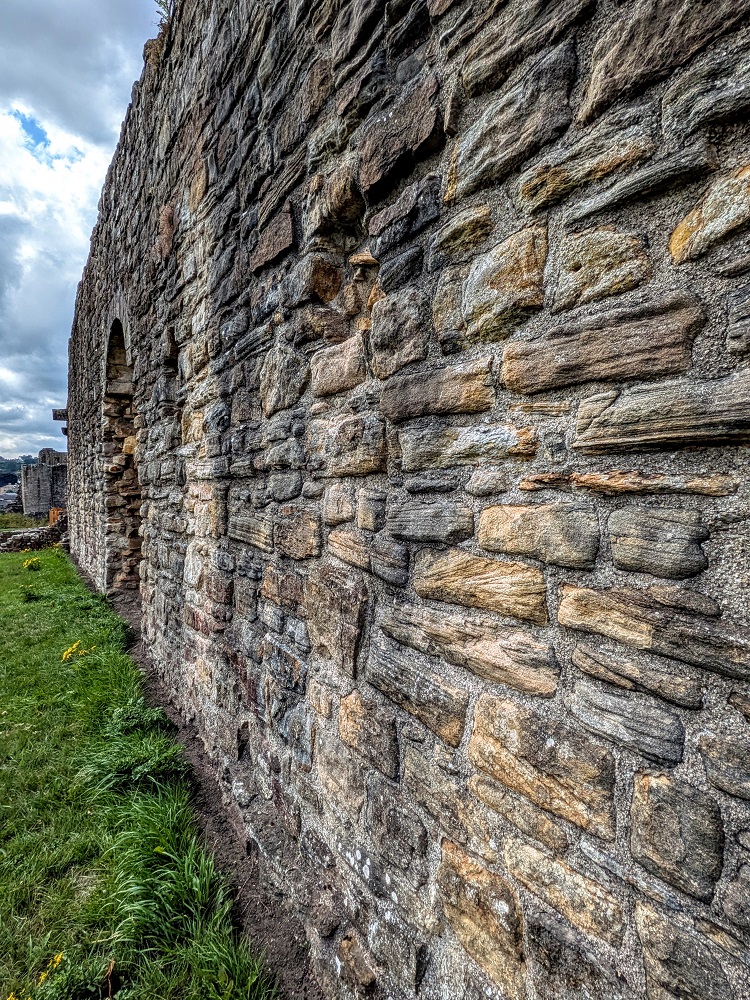
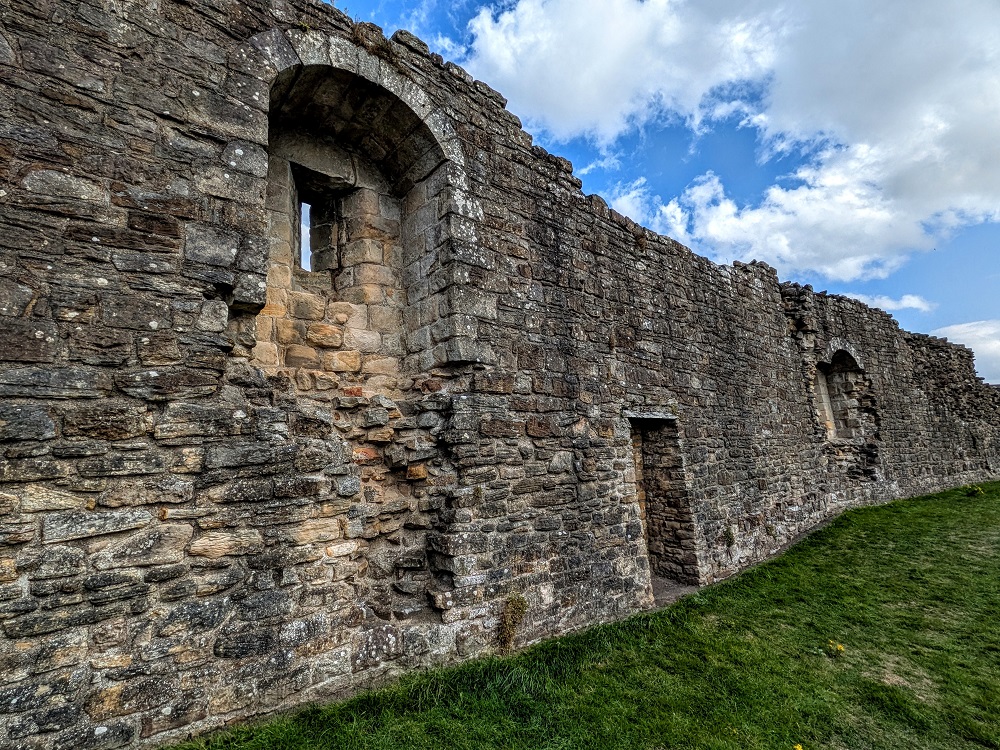
Along the wall by the entrance, there are a few arrow-loops. These are recessed archways where archers could stand in order to defend the castle.
In my opinion, English Heritage has done a great job with providing information at Barnard Castle. There were numerous small information boards all around the site that offer enough details to be informative, but without having excessive text that’s too much to read or by having lots of large signs that spoil the appearance and aesthetic of the castle.
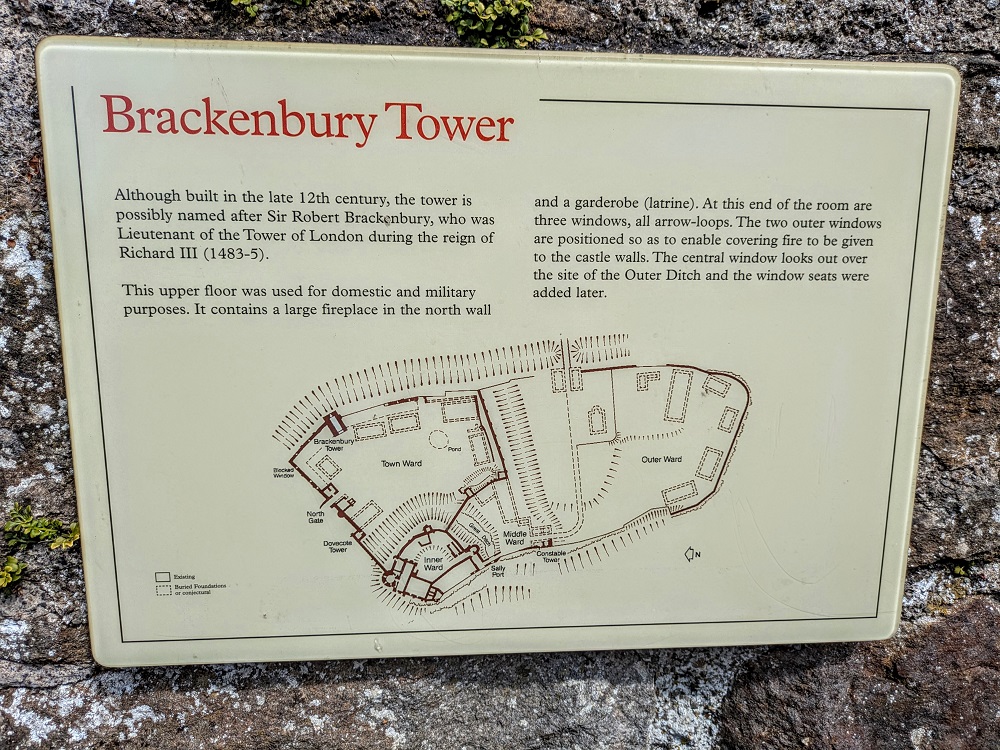
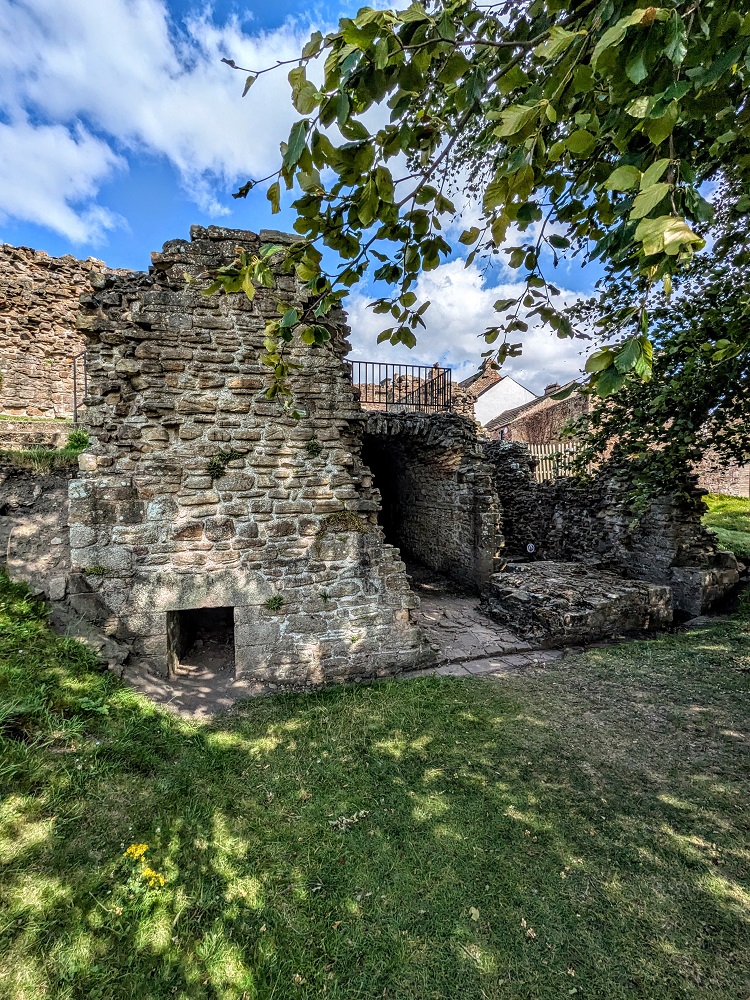
The lower part of Brackenbury Tower had living quarters, plus it was used as a store room.

Back by the visitor center/gift shop at the entrance, there was a board displaying details about the trees in the castle’s orchard.

The orchard isn’t as quite orchard-y as I’d imagined it would be, only consisting of ~18 fruit trees. That’s not to say it was a disappointing experience though. I’d been pleasantly surprised to see on the sign above that you can pick fruit from their trees; you just have to twist and pull the fruit off gently.
The first fruit tree we came across was one of the pear trees which had dropped quite a bit of its fruit already.
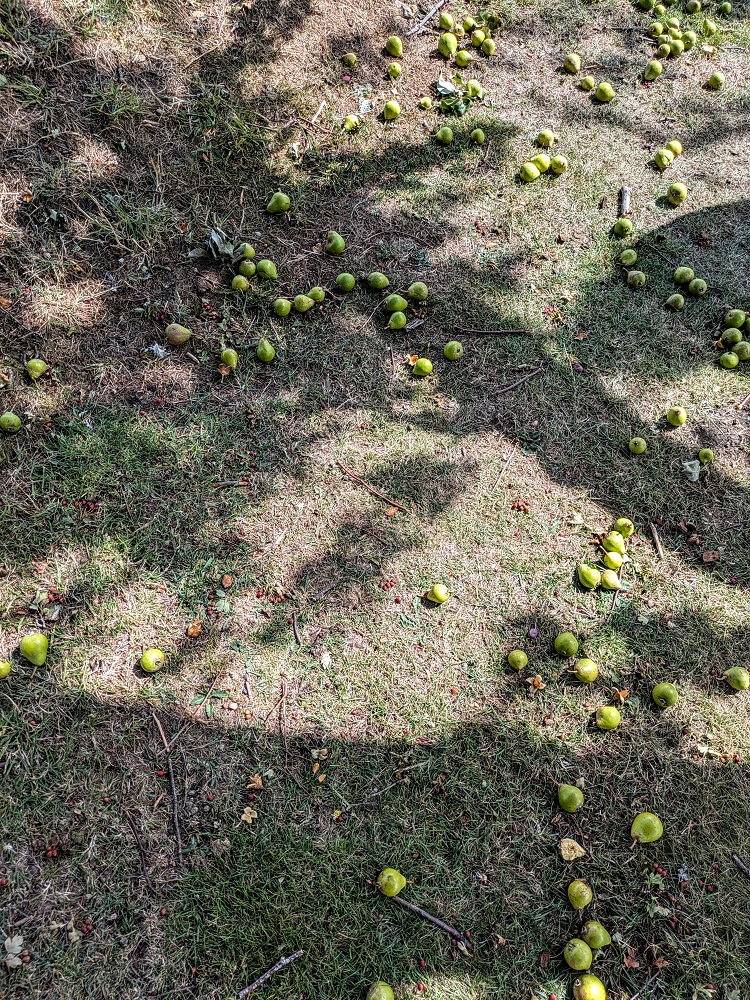
There were still some pears on the branches though, so we carefully picked one off to try. These pears were extremely small; here’s one in my hand for scale.
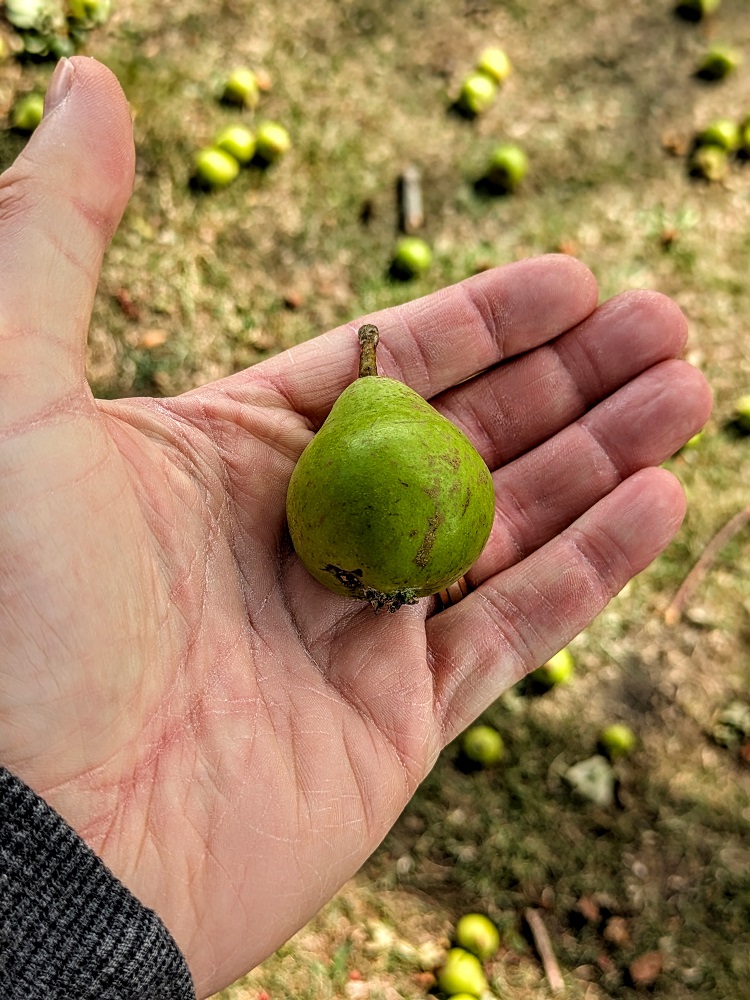
It wasn’t the most ripe or flavorful pear we’ve ever tried, so we each only had one small bite and left the rest. We figured the apples might be better, so we tried an equally small apple. This was a little better than the pear, but still not quite ripe or sweet enough.
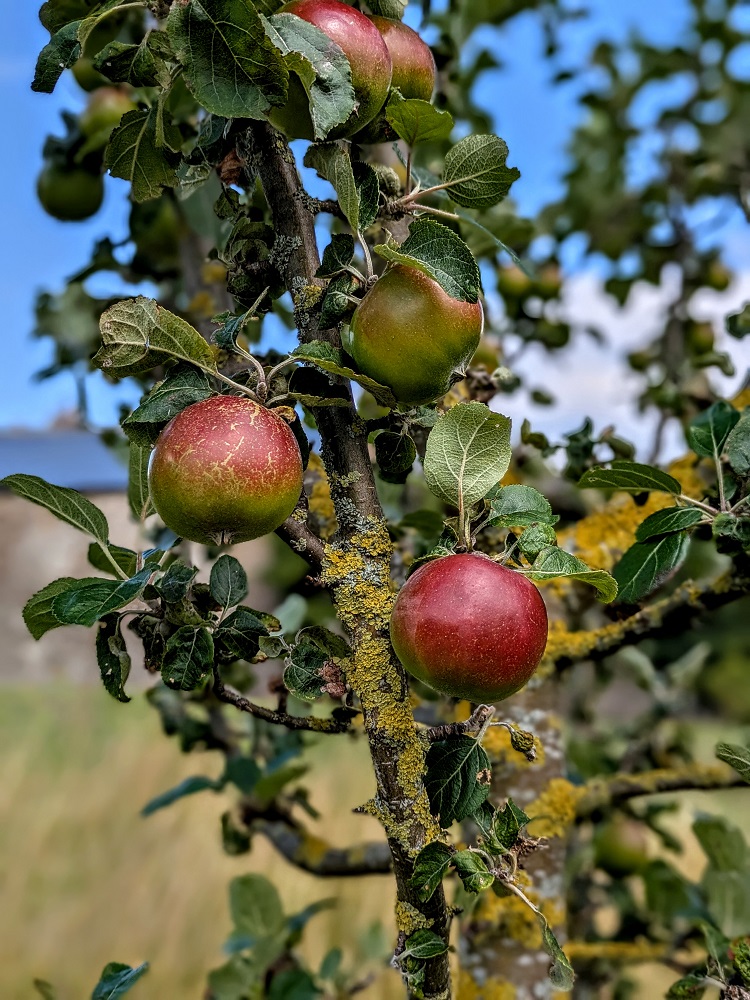
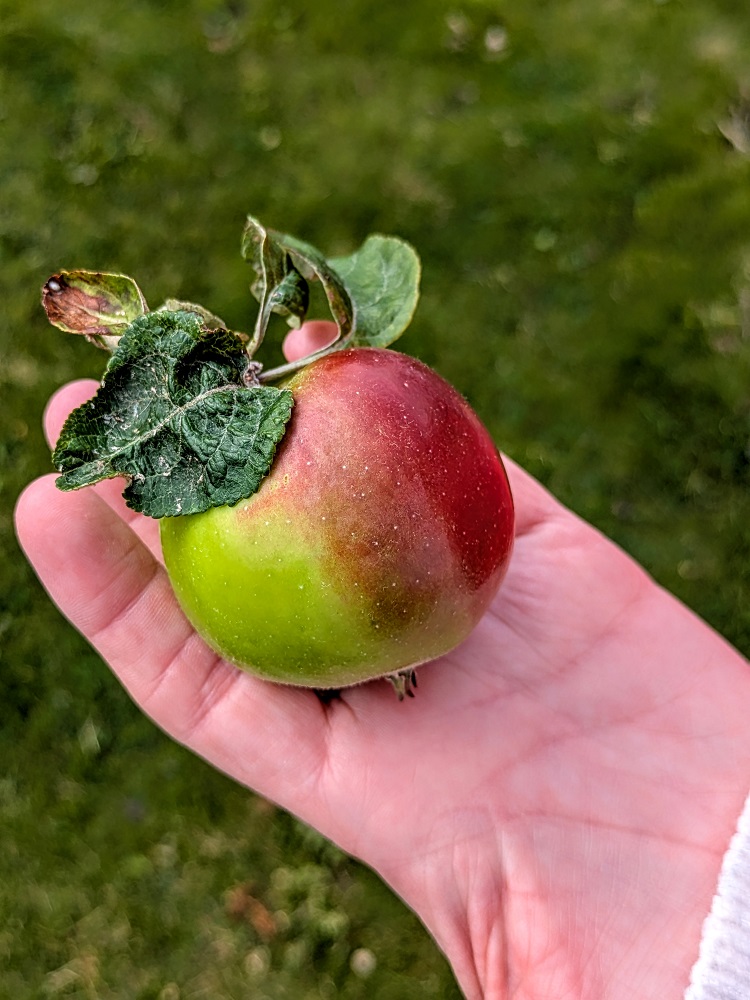
We then tried a larger apple from a different tree and that one was much better.

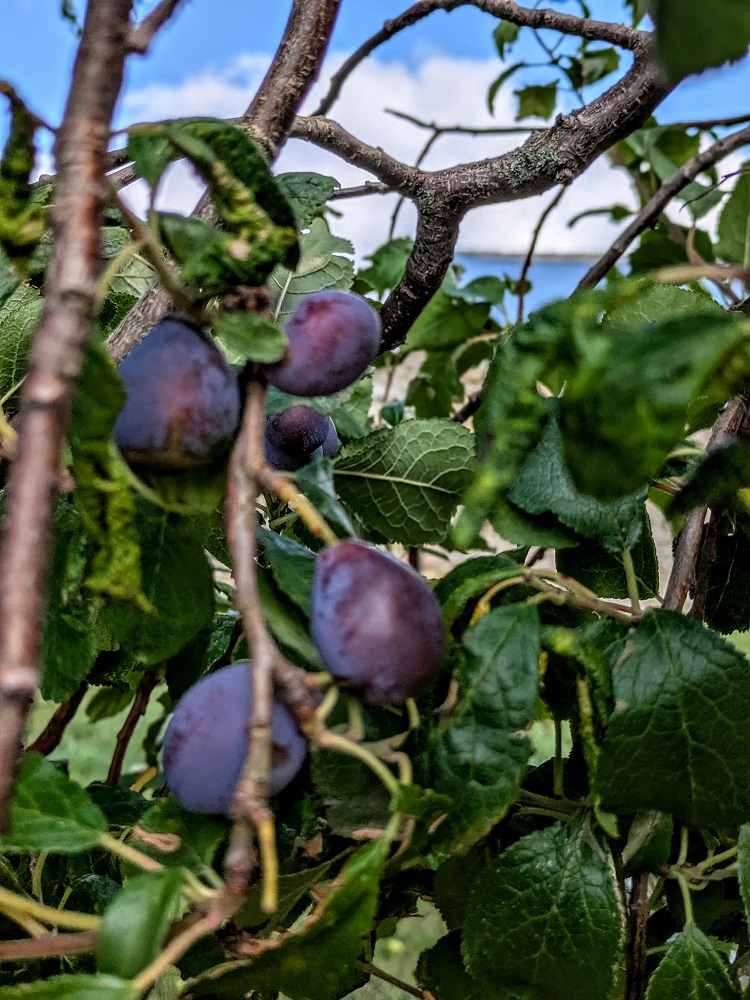
We were curious about trying a damson, but we had no clue if they’d be ripe or not, so we ended up giving that a miss.
Anyway, we weren’t there for fruit – we were there to check out the castle!
The grounds have a lot of grassy space, so it’s a great place to visit with energetic younger children who want to run around.
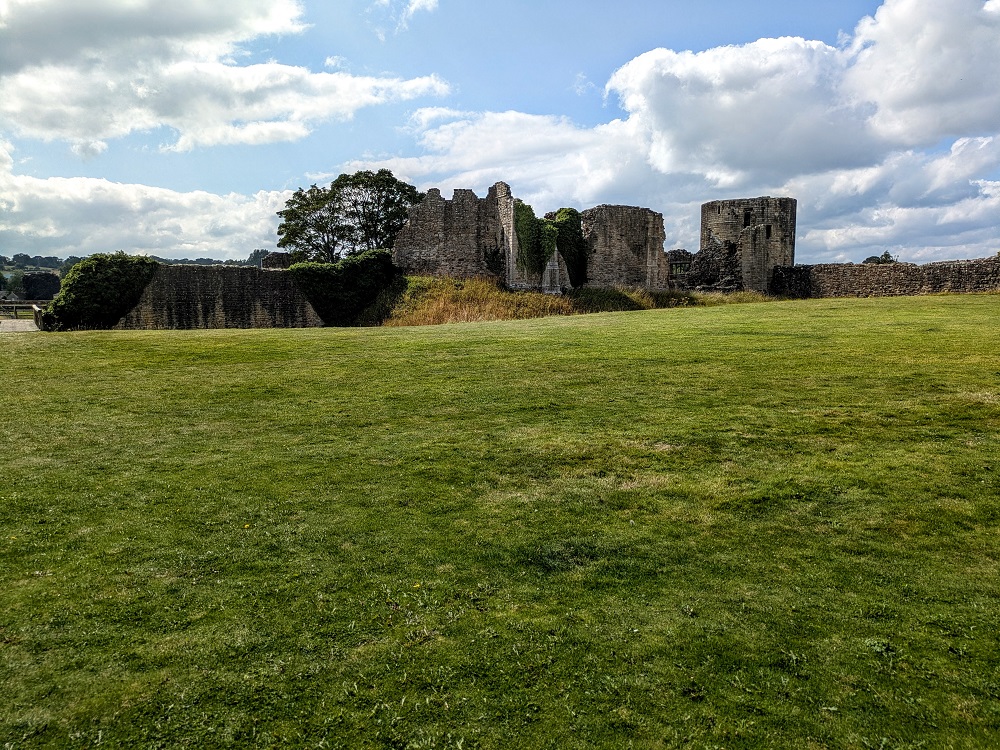
Barnard Castle dates back to the late 11th century. It was mostly made of wood and earth and was the residence of Guy de Baliol who was a knight from Picardy. It was passed down in the Baliol family, with his nephew Bernard building a stone castle on the site in the 12th century. The walls you see today therefore date back about 900 years.
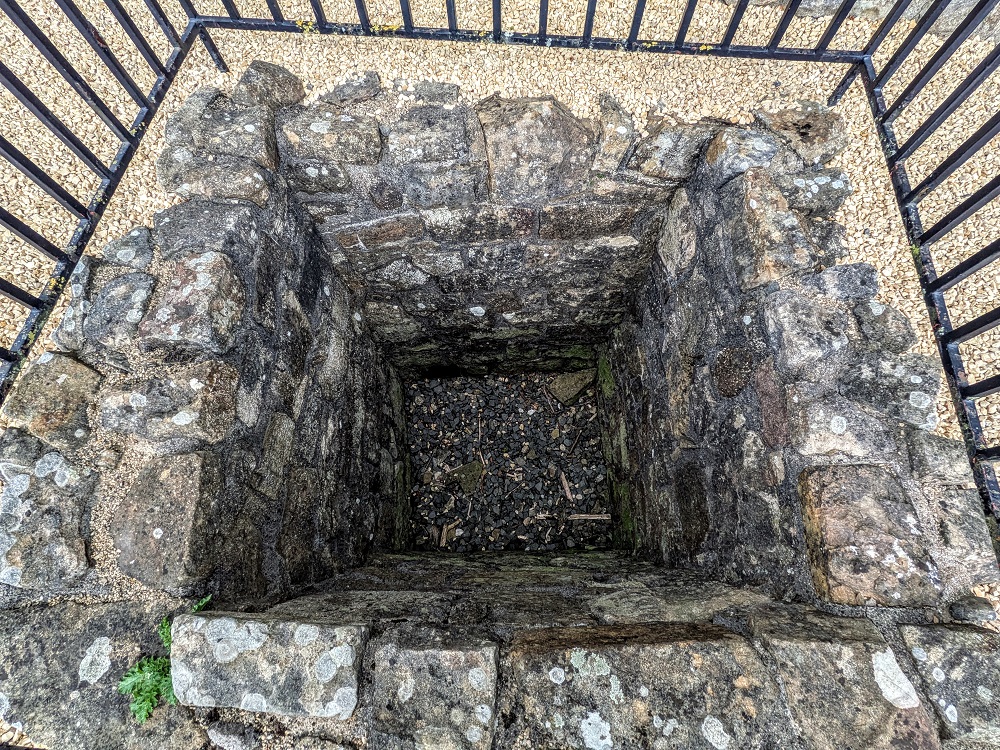
Many centuries later, the castle fell into ruins. Some parts have since been excavated, such as the area that housed the Town Ward buildings. There’s a well with steps next to it leading up to an earth rampart.
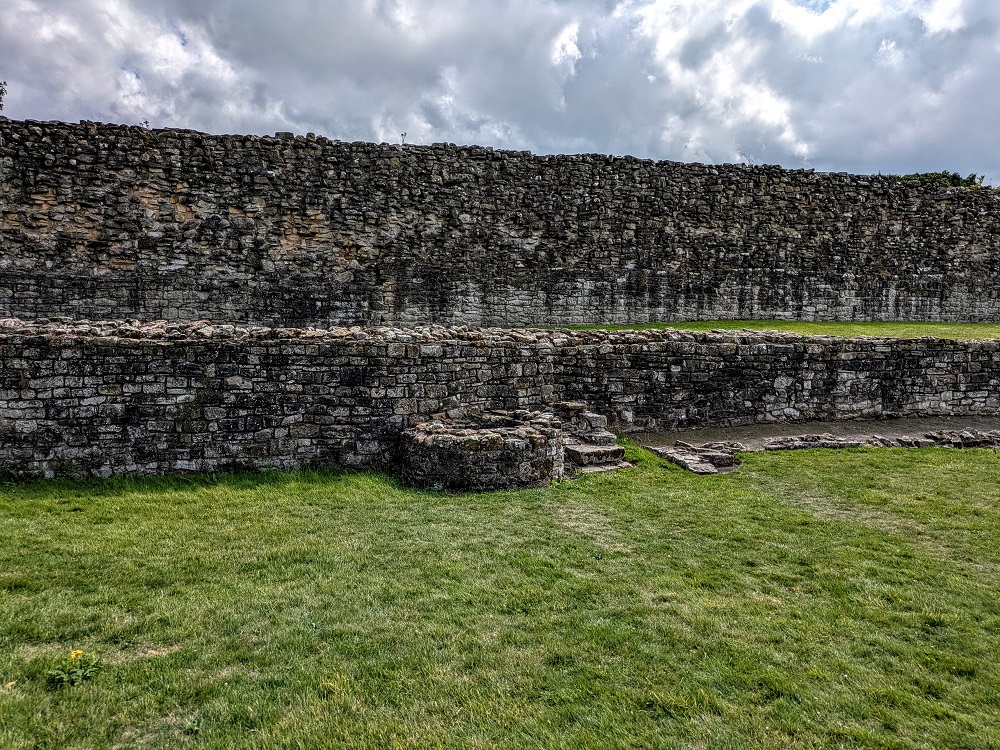
The wall at the far end separates the Town Ward from the Outer Ward.
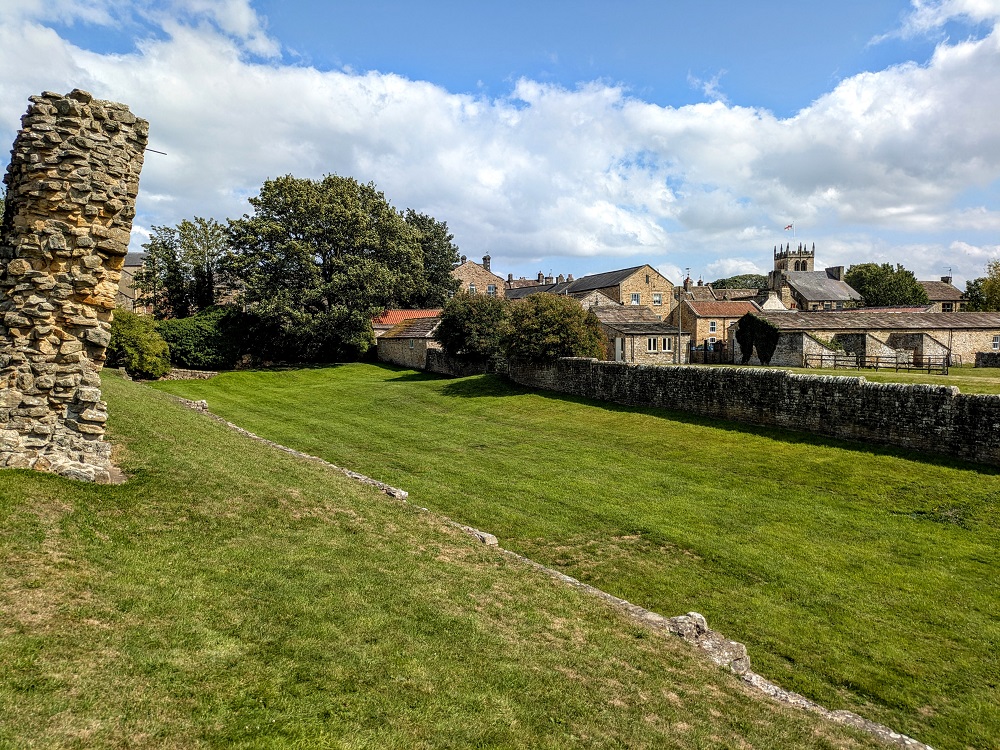
Although it fell into ruins, what remains on the castle grounds is still in pretty good shape overall.
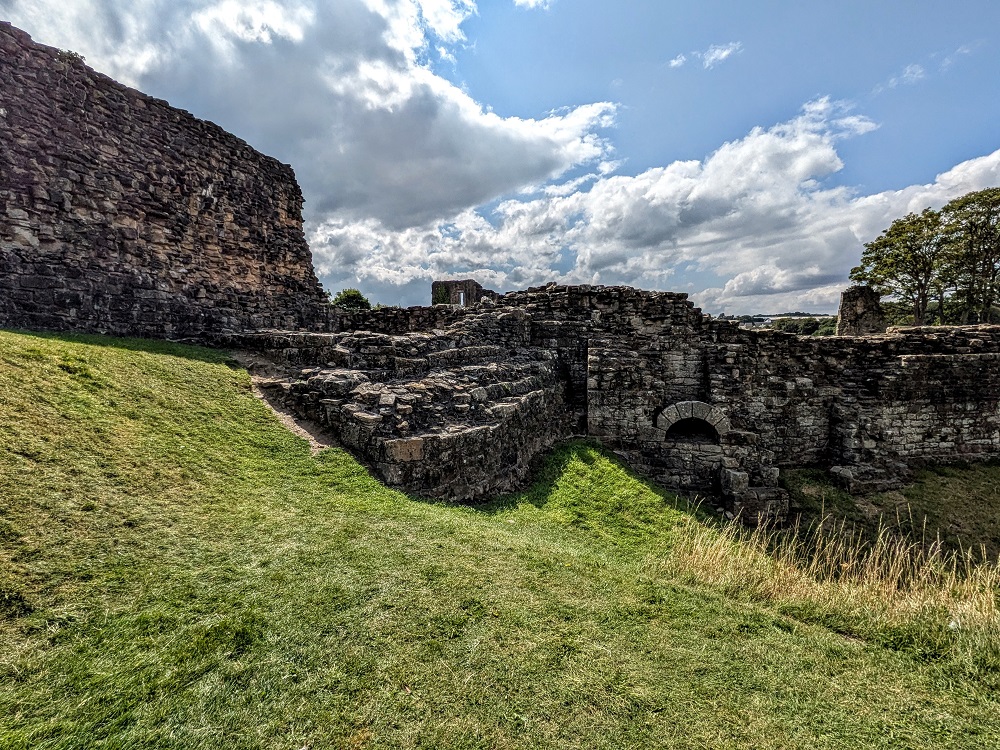
In addition to the Town Ward and Outer Ward, there was the Middle Ward and Inner Ward. The Middle Ward was known back in the day as ‘Many Gates’ because it’s what connected the other three wards with each other. It therefore served as the access point for the Inner Ward, ensuring that only those who were authorized could gain access.
To get from the Town Ward to the Middle Ward, there’s a wooden bridge that crosses over what was once a moat.
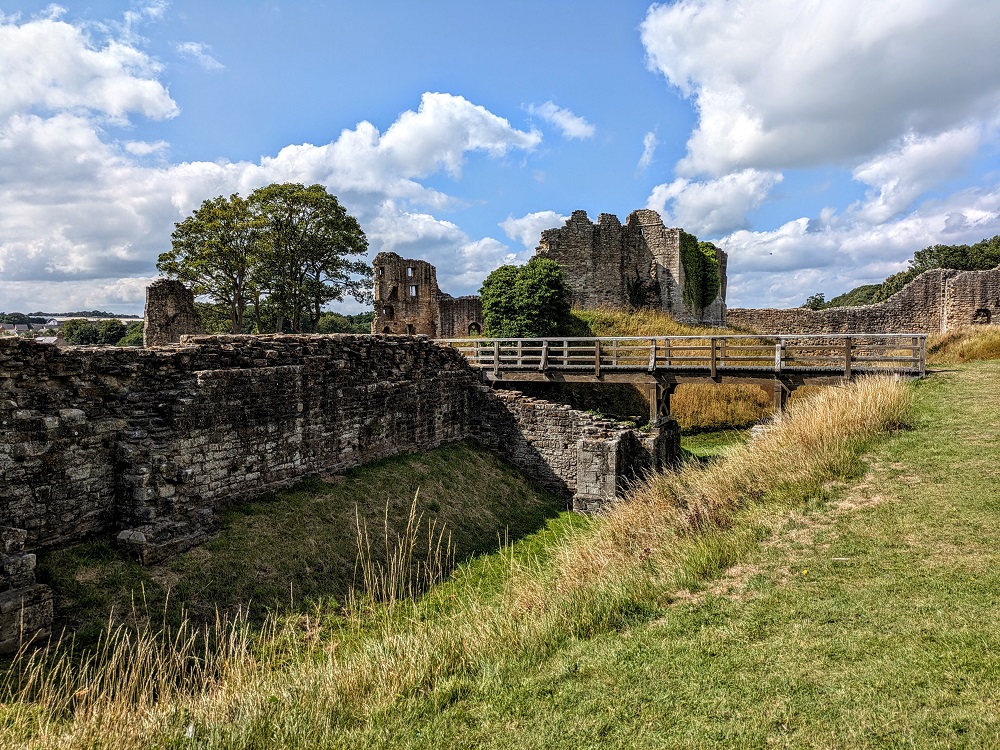
When entering the Inner Ward from the Outer Ward, people had to go via the Constable Tower. Less than half of the tower remains nowadays, but it once had at least two additional stories on top of what’s there now.
To get from the Middle Ward to the Inner Ward, you cross over another bridge.
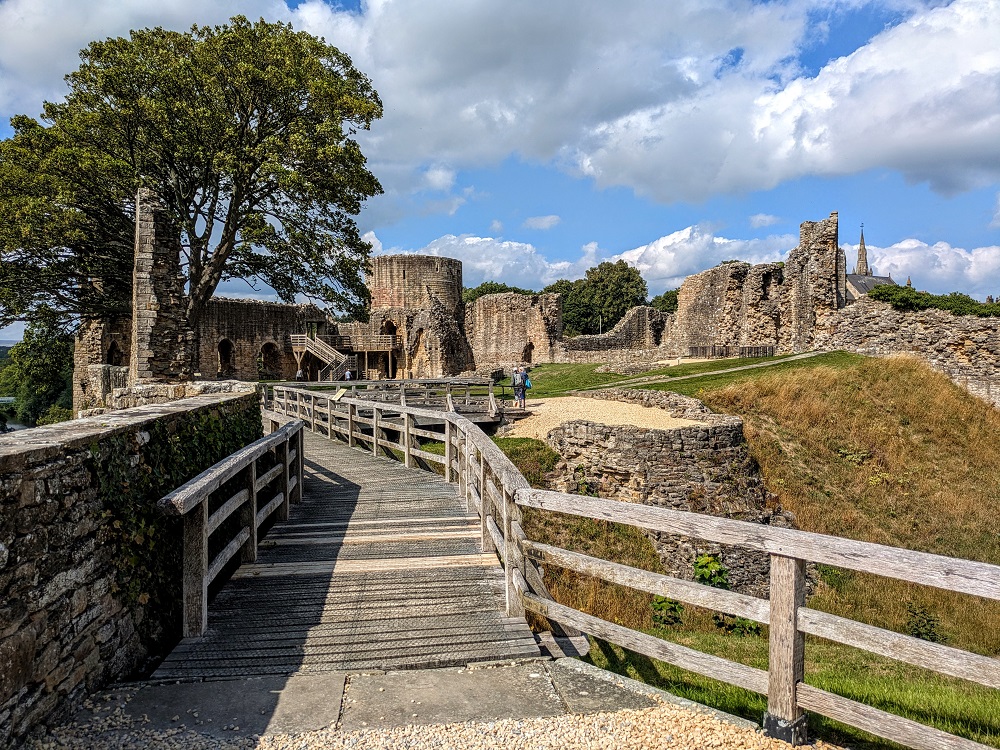
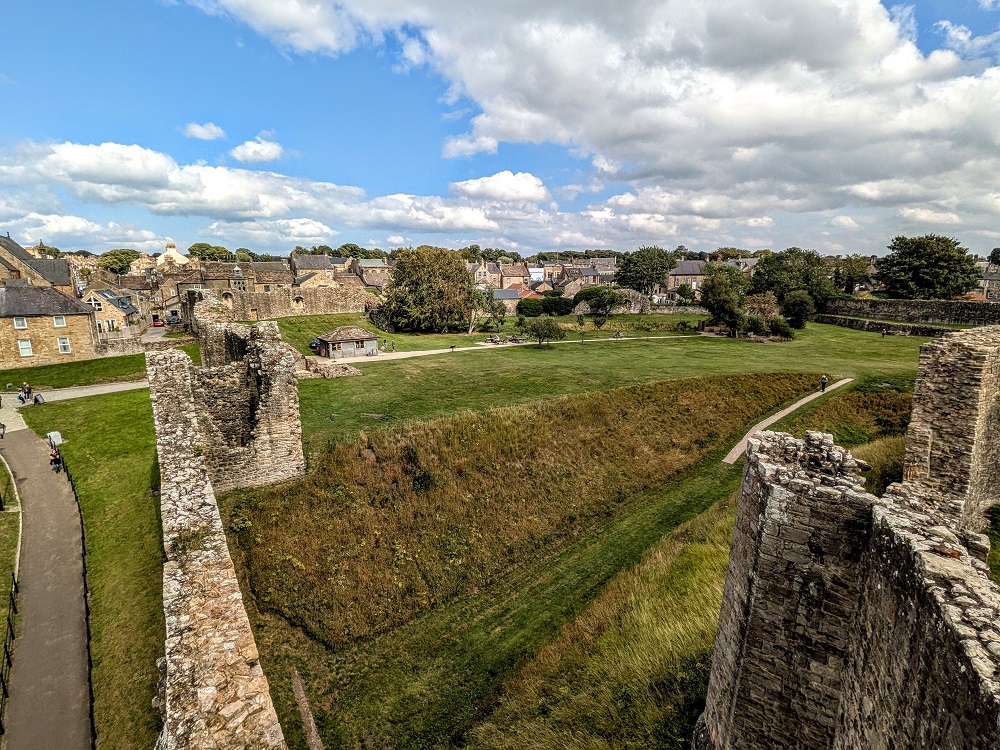
That bridge spans the Great Ditch which was dug in the 1100s to help provide additional defense.
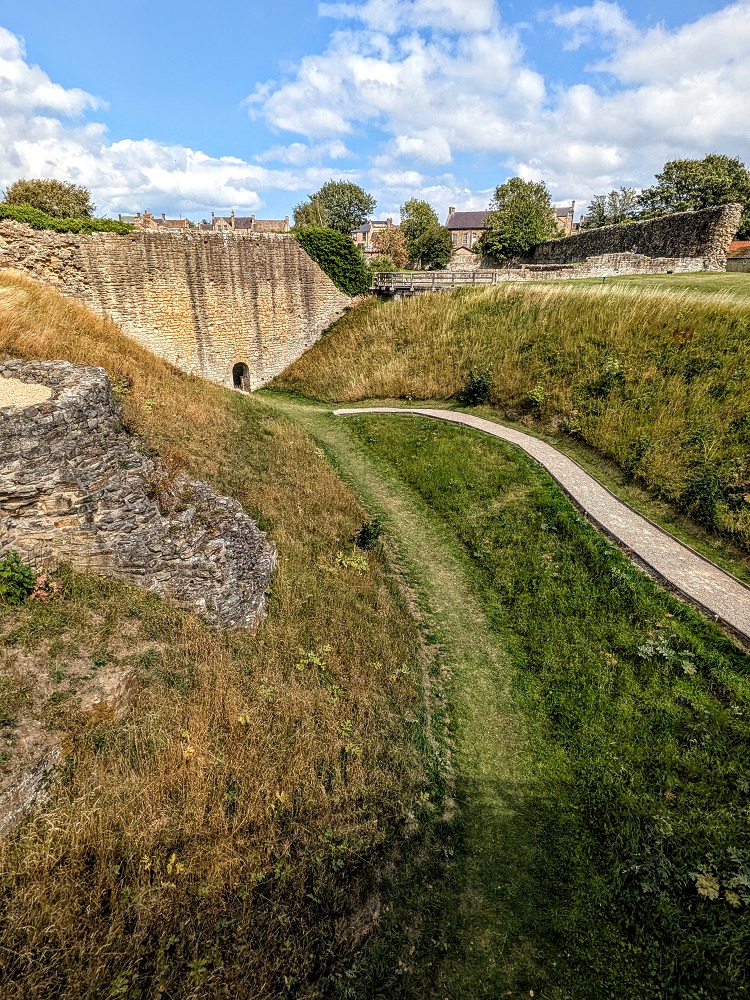
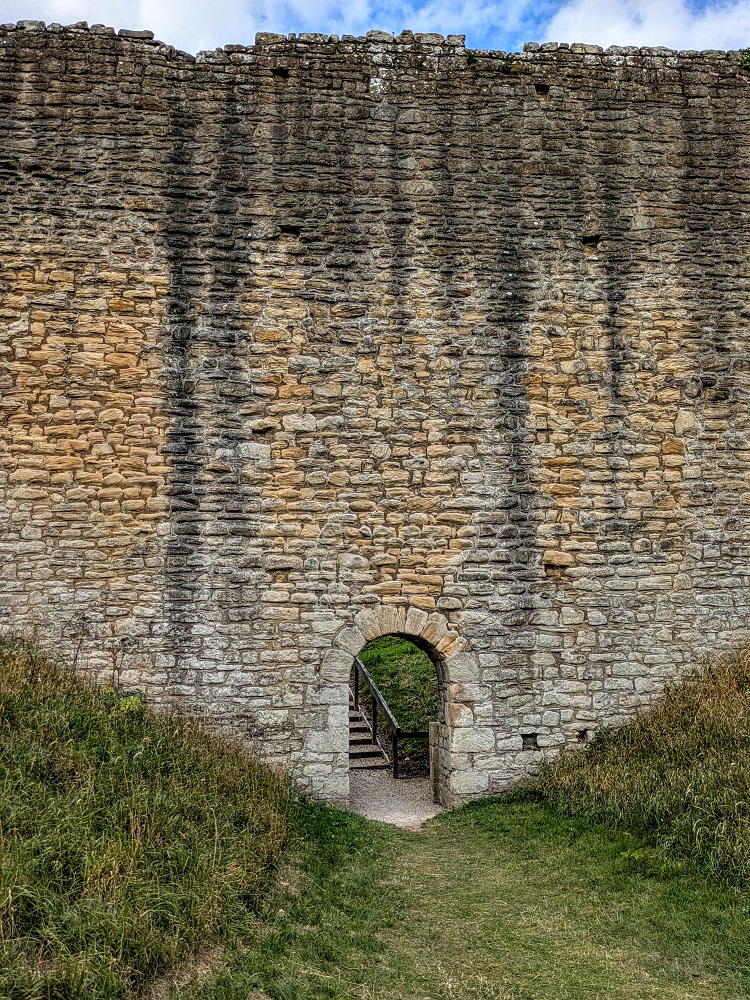
On the far side of the Great Ditch is part of the wall that separated the Middle Ward from the Town Ward. You can see various holes in the wall; that’s where wooden scaffolding was used to build the castle.
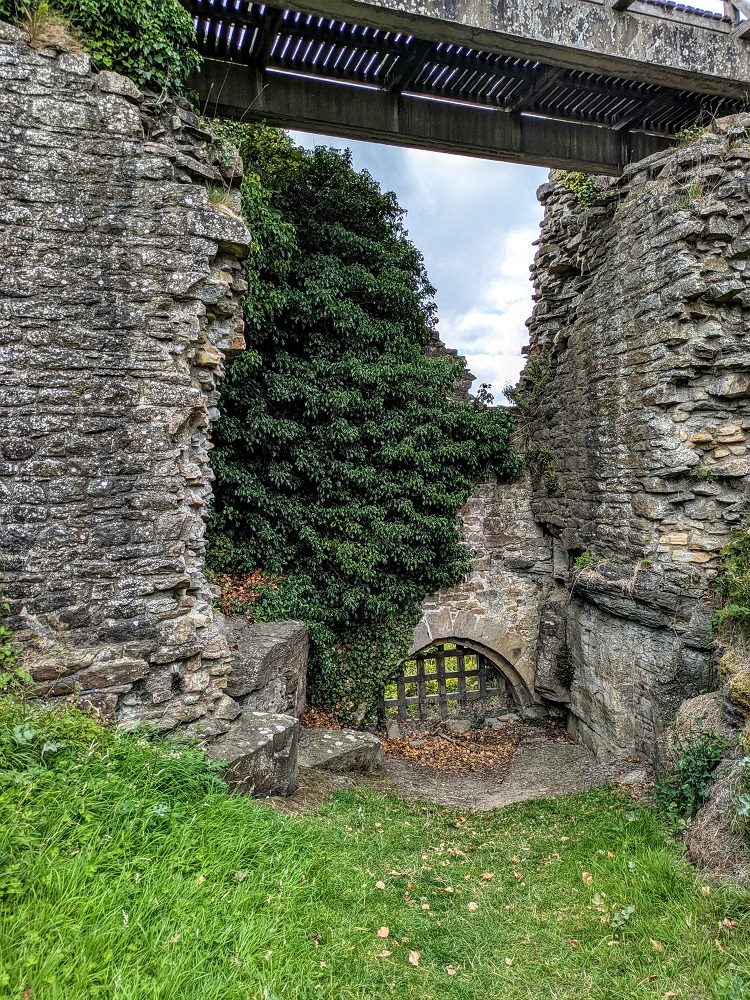
Beneath the bridge you cross over to the Inner Ward is a sally port with a portcullis. This provided a short cut to the river just outside of the castle.
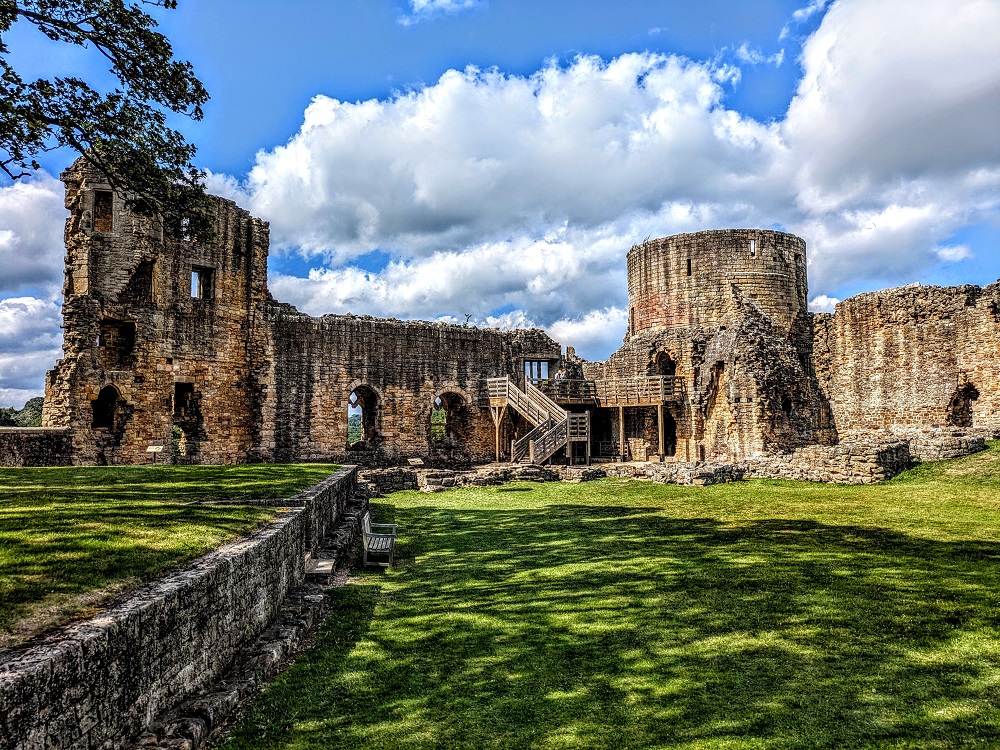
The Inner Ward was the most interesting part of Barnard Castle for me. Although it’s in ruins and so it’s not the majestic building that it would once have been, there are parts of it still standing that can give you a sense of what it looked like almost 1,000 years ago.
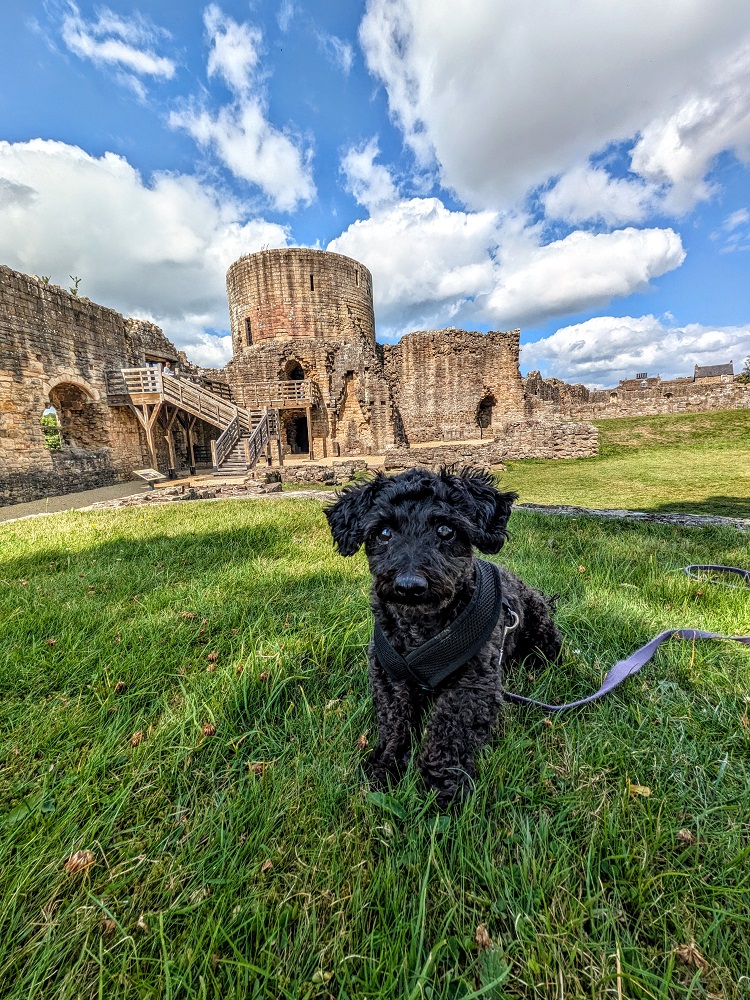
Another great feature of Barnard Castle is that it’s pet-friendly. Dogs are allowed throughout the grounds and inside the remaining ruins provided they’re kept on leash, so we didn’t pass up on the opportunity to bring Truffles along.
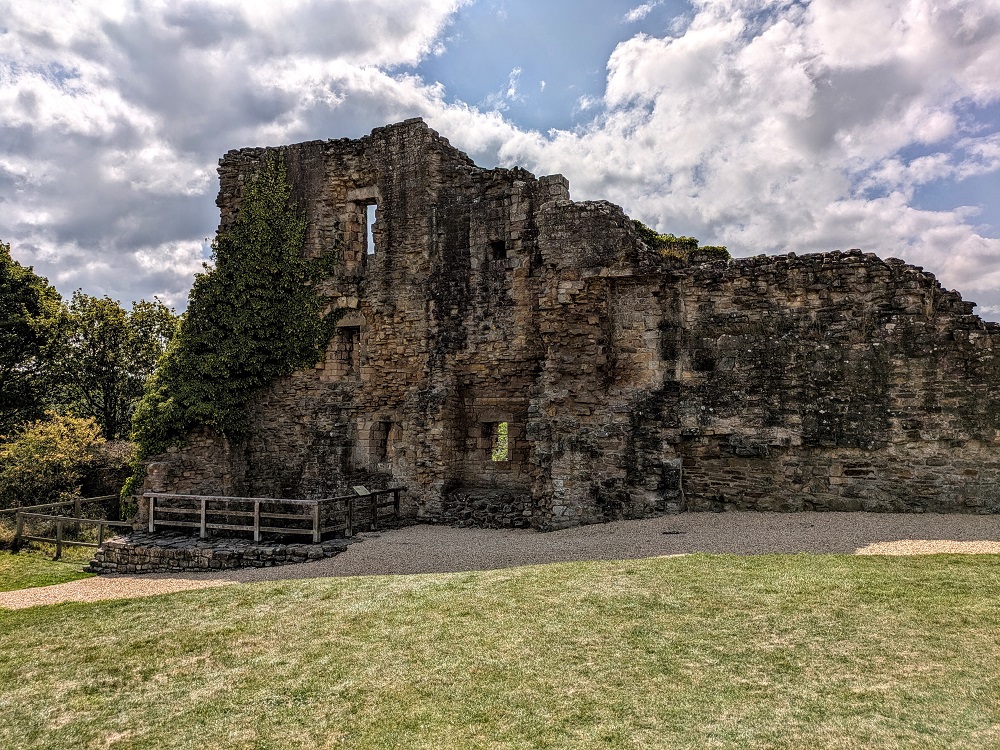
On the left side of the Inner Ward is Mortham Tower. This was a lookout tower that once stood at least five stories high. While much of the castle was built in the 1100s, this tower was added – and the Great Hall was rebuilt – in the late 1300s.
The parts of the tower that can still be seen were once the pantry, the buttery, store rooms and passages.
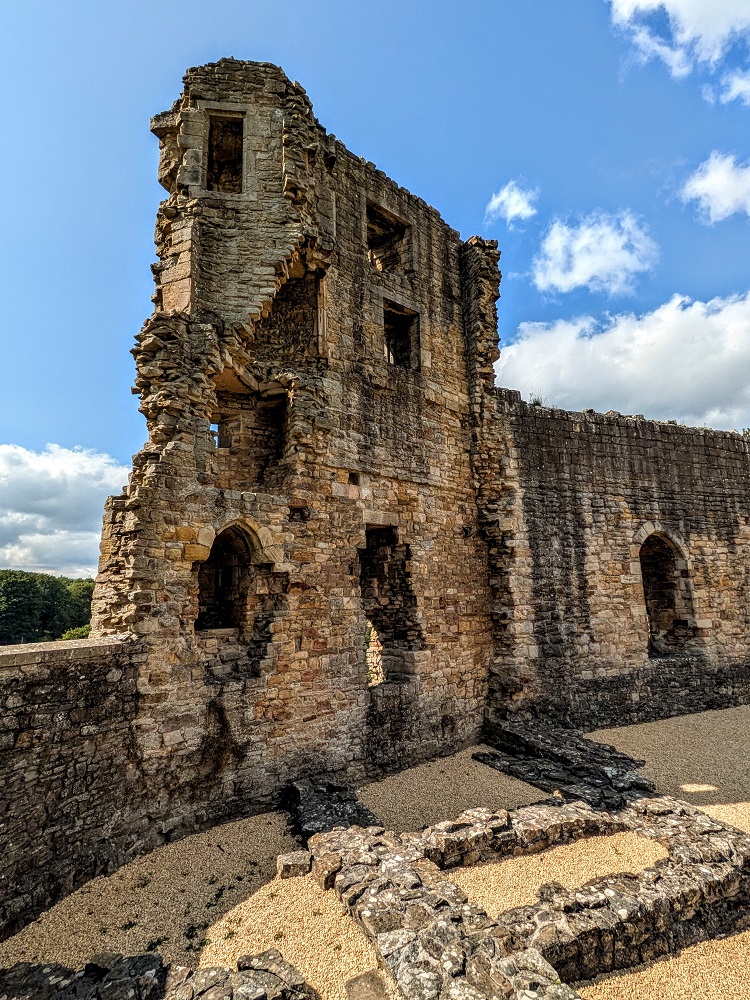
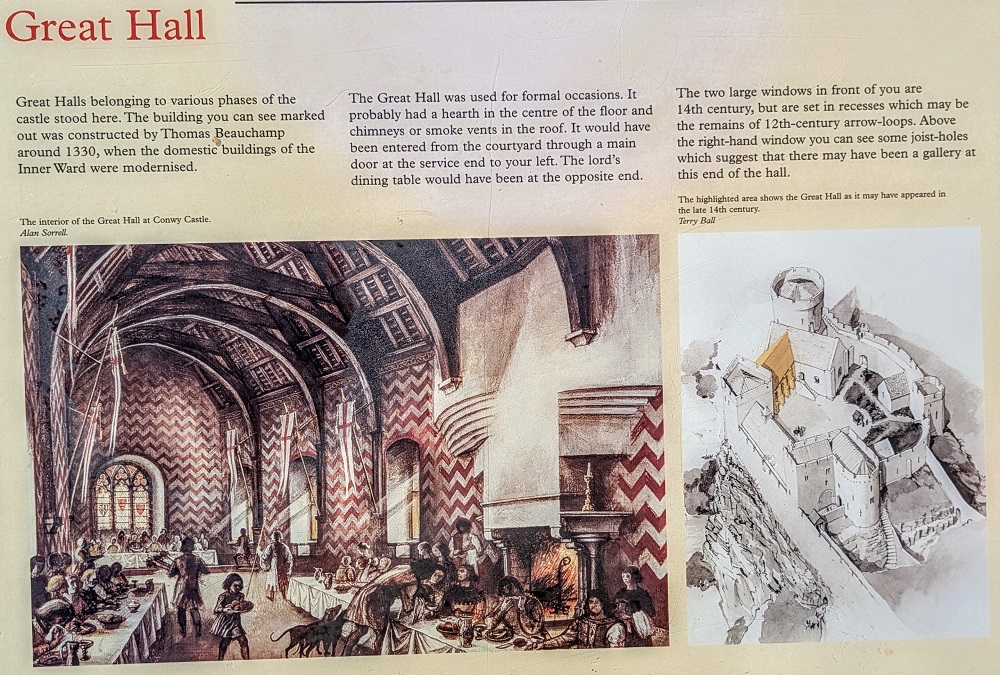
In front of the tower is what was once the Great Hall. There’s sadly little of this part of the building remaining, but there was an information board providing more details about it and what it might’ve looked like based on an illustration of the Great Hall in a different castle.
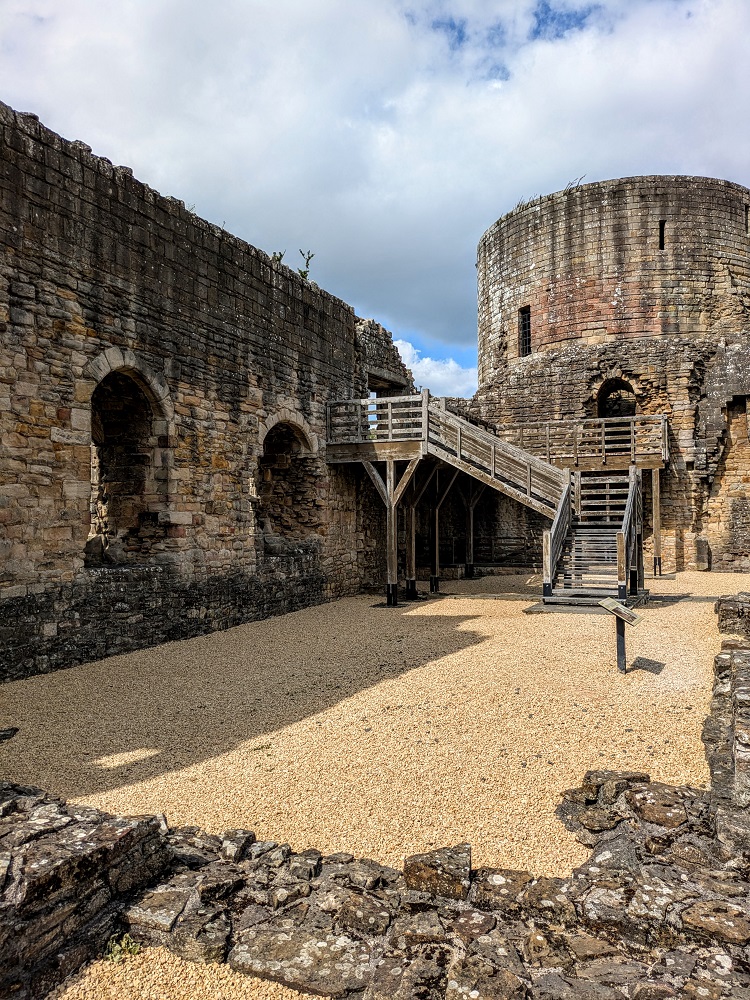
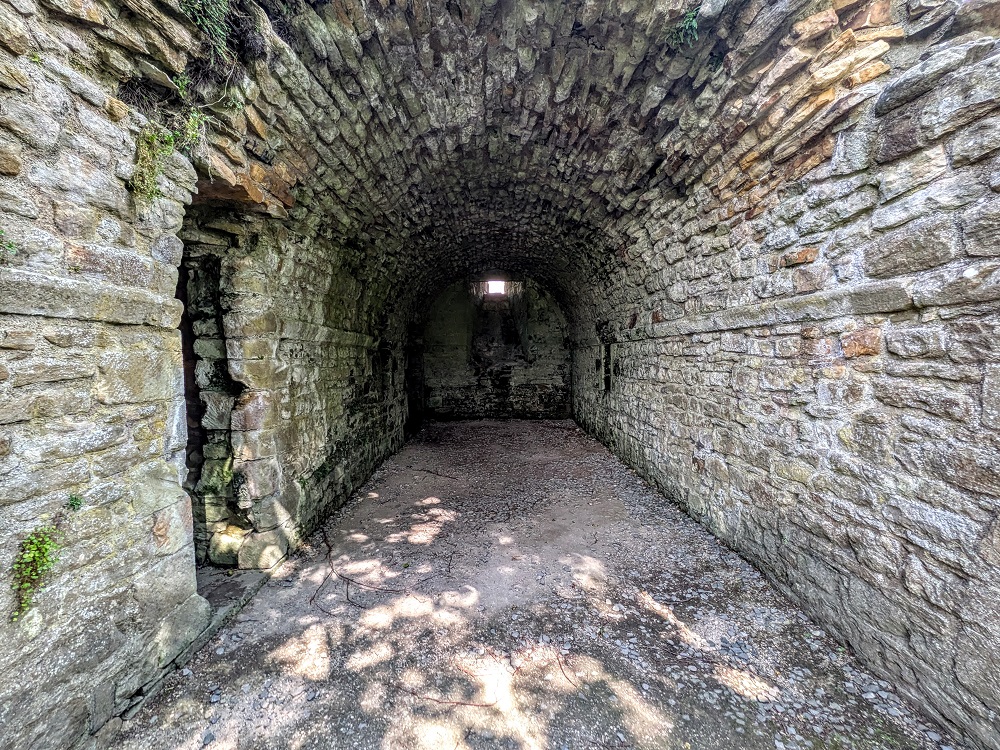
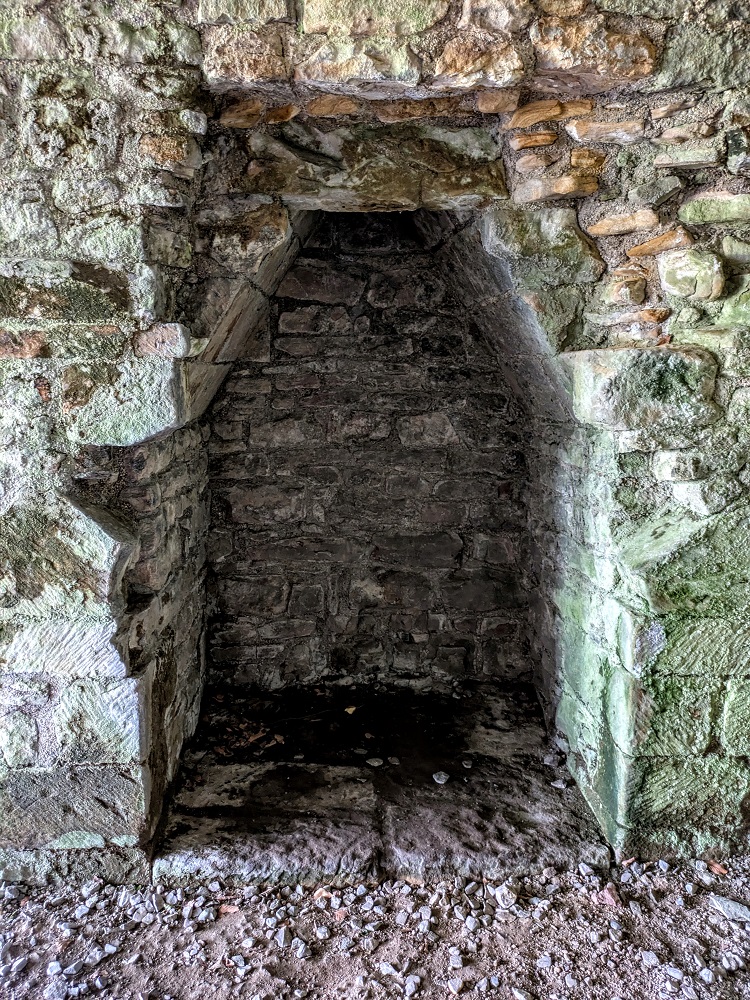
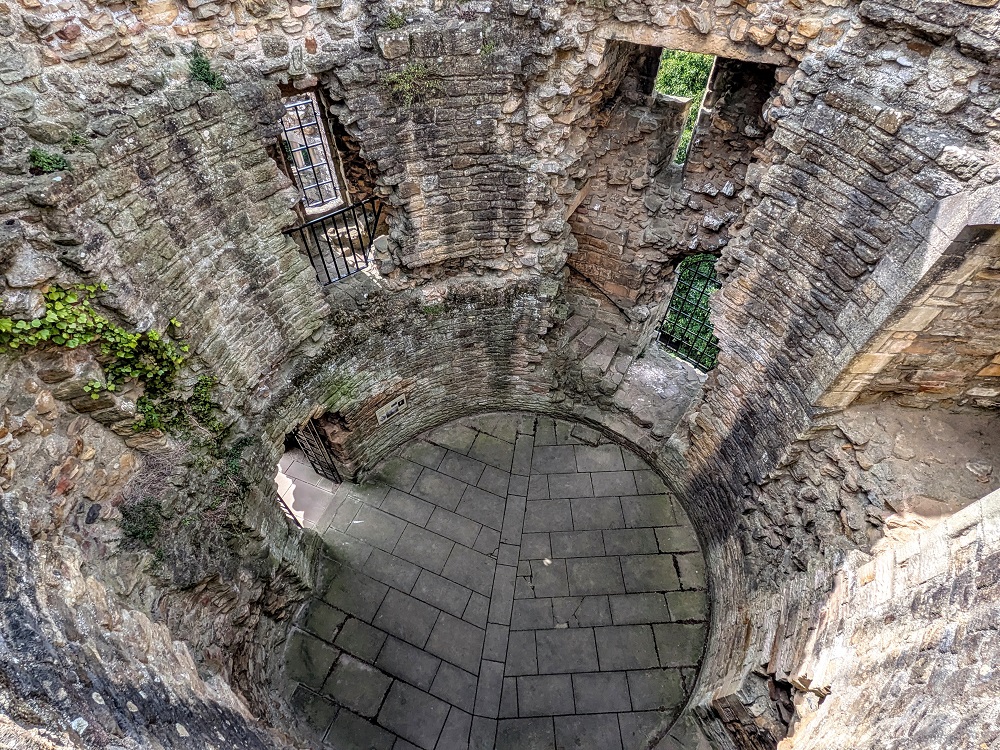
The most prominent part of the castle is the Round Tower which you can explore across several floors. On one floor you’ll find the undercroft which was used for domestic use and storage. In this room there’s a large well, a fireplace, a latrine and more.

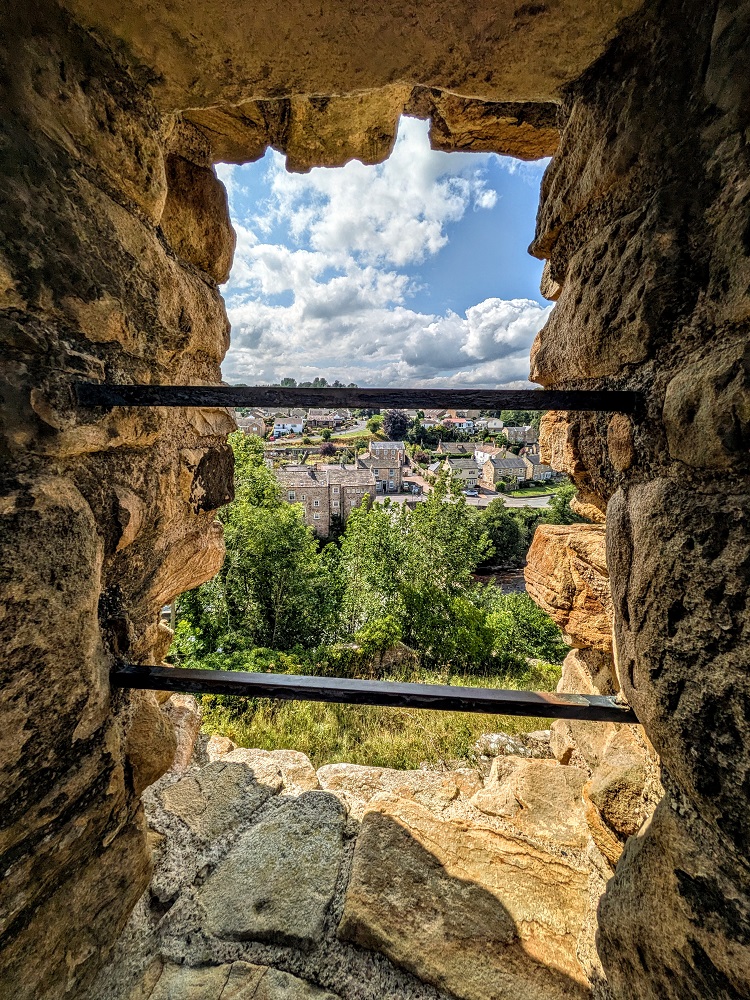
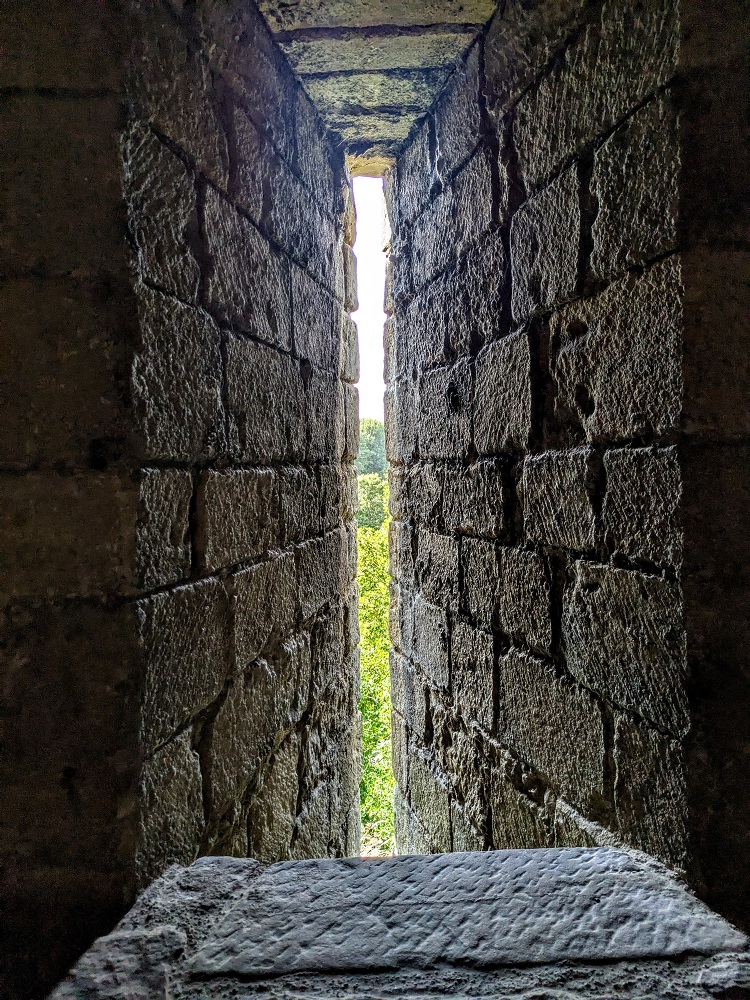
In case you’re not familiar with design features of castles, they often had narrow windows for a couple of reasons. One was to provide some element of natural light while protecting the room from the elements and wind.
Another important reason was for defensive reasons. They allowed archers to shoot arrows out at anyone attacking the castle, while reducing the likelihood that archers outside of the hotel would be able to fire their arrows inside.
From the undercroft, you can take a spiral staircase up to the next floor of the Round Tower…
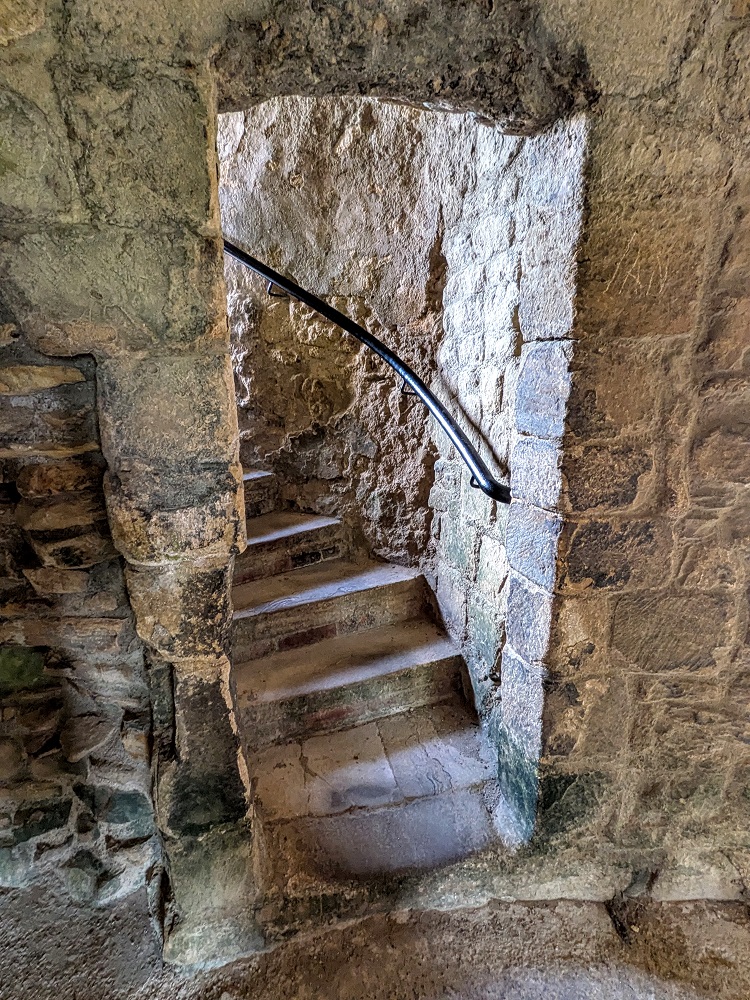
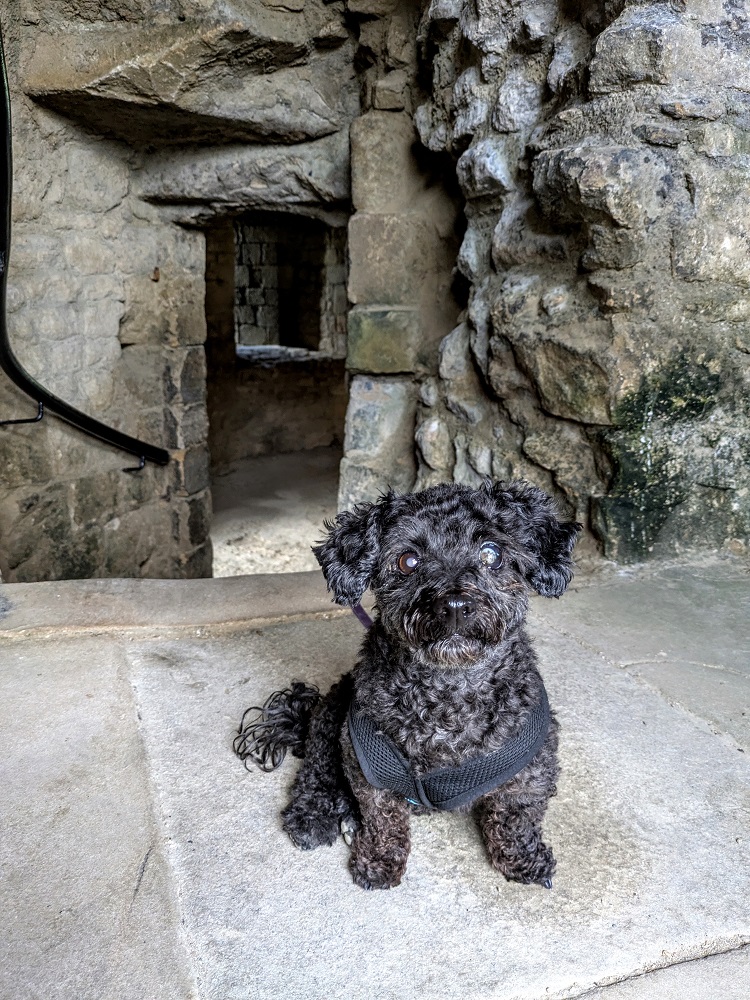
…which provided a good photo op for Truffles.
That spiral staircase leads to a floor that once featured the main private chamber. This had a large fireplace, along with two latrines (also known as garderobes).

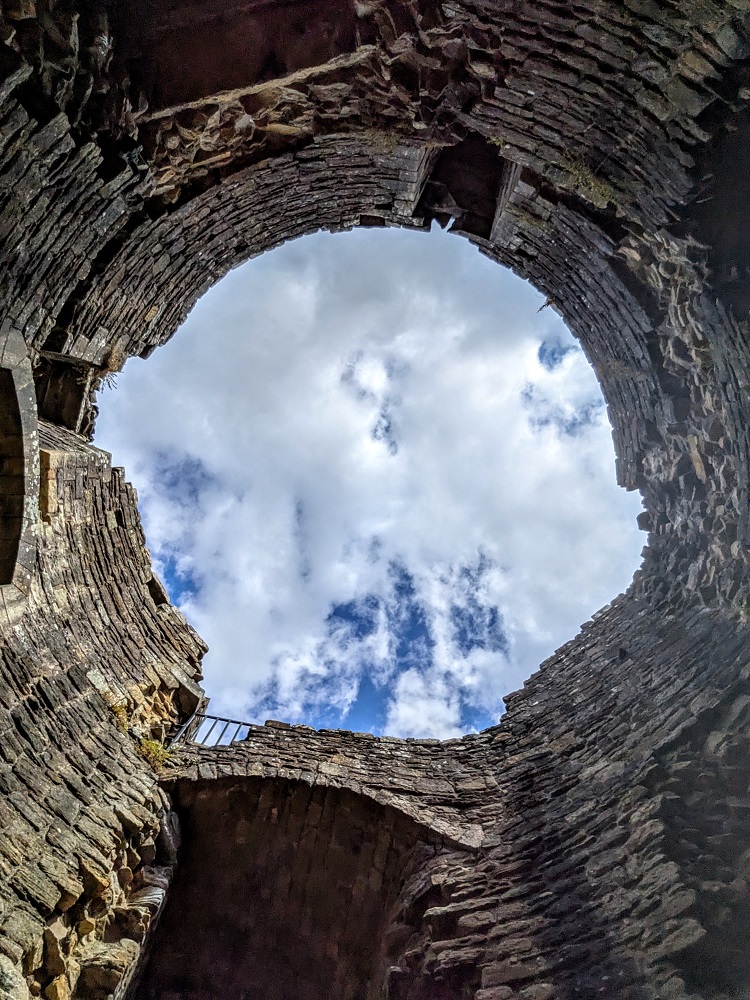
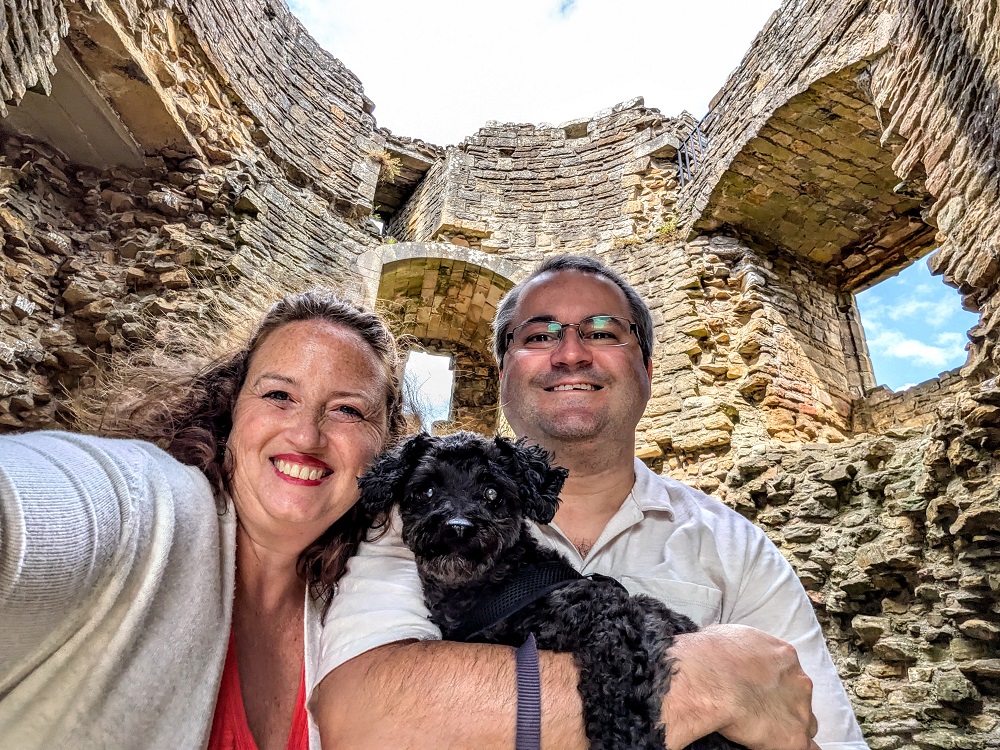
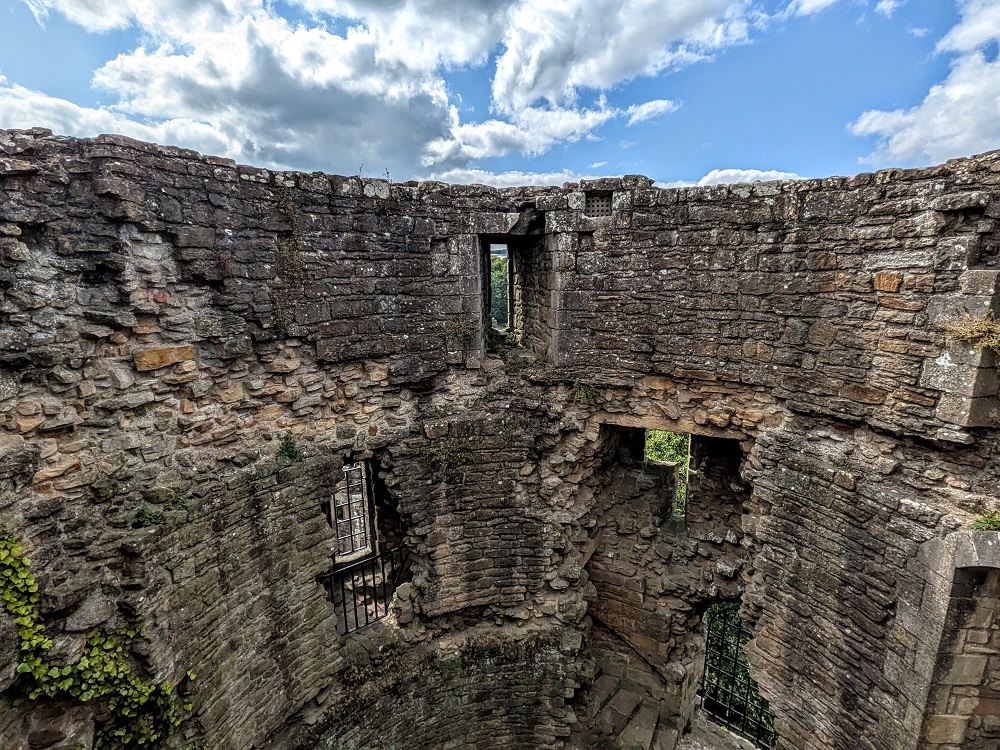
There was then another spiral staircase that led up to the top of the Round Tower. That offered some good views of the tower below, along with looking back out towards the rest of the castle grounds.
After heading back down the stairs, we headed outside on to a modern day wooden platform. That looked down at what was once the Great Chamber. It’s not known what that ground level floor would’ve been used for; it had a fireplace, but it’s not thought to have received much daylight due to the other buildings that were constructed around it.
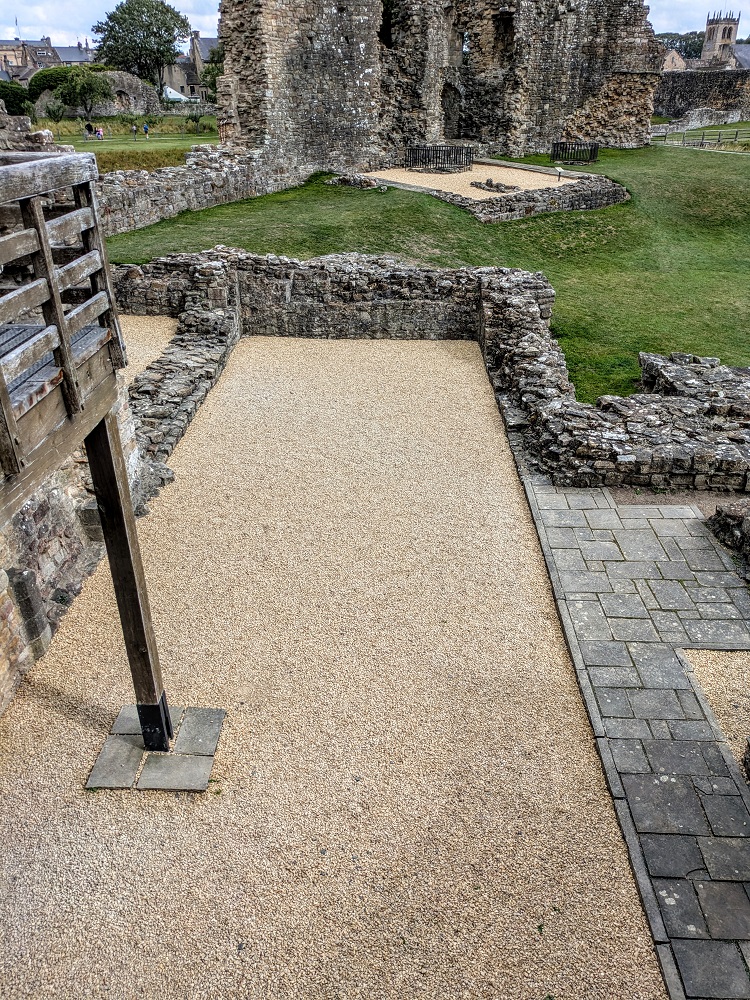
On the second floor where we were standing was a large oriel window that provided great views of the River Tees that runs through the town of Barnard Castle.
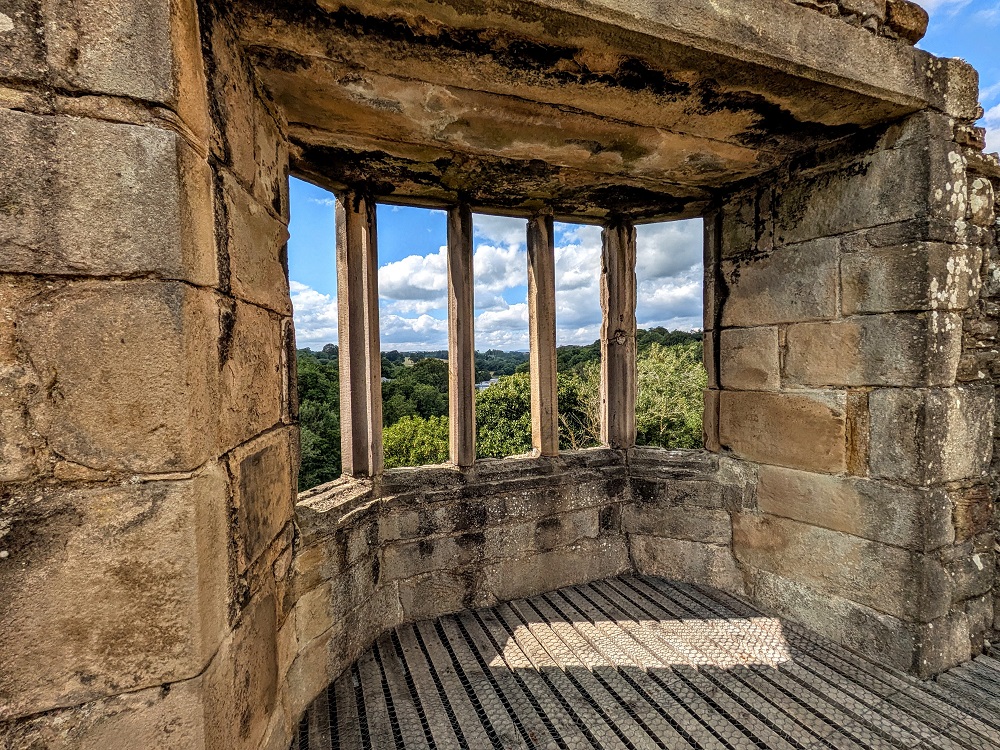
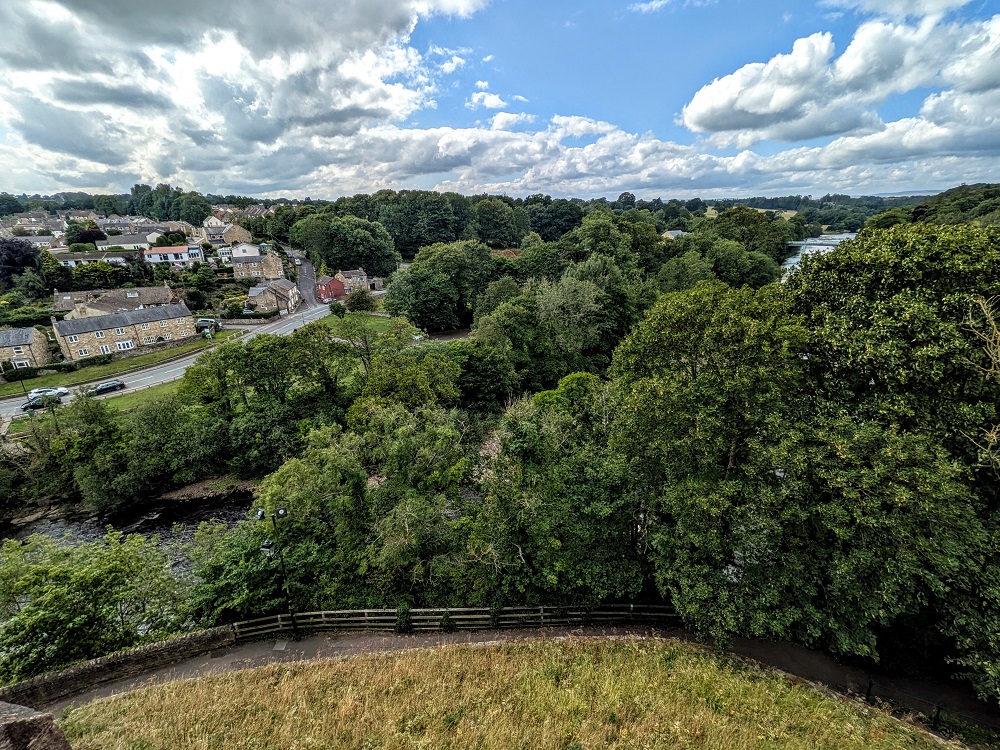
We’d explored most of the castle at that point, but there were still a few other parts to see like the Bakehouse.
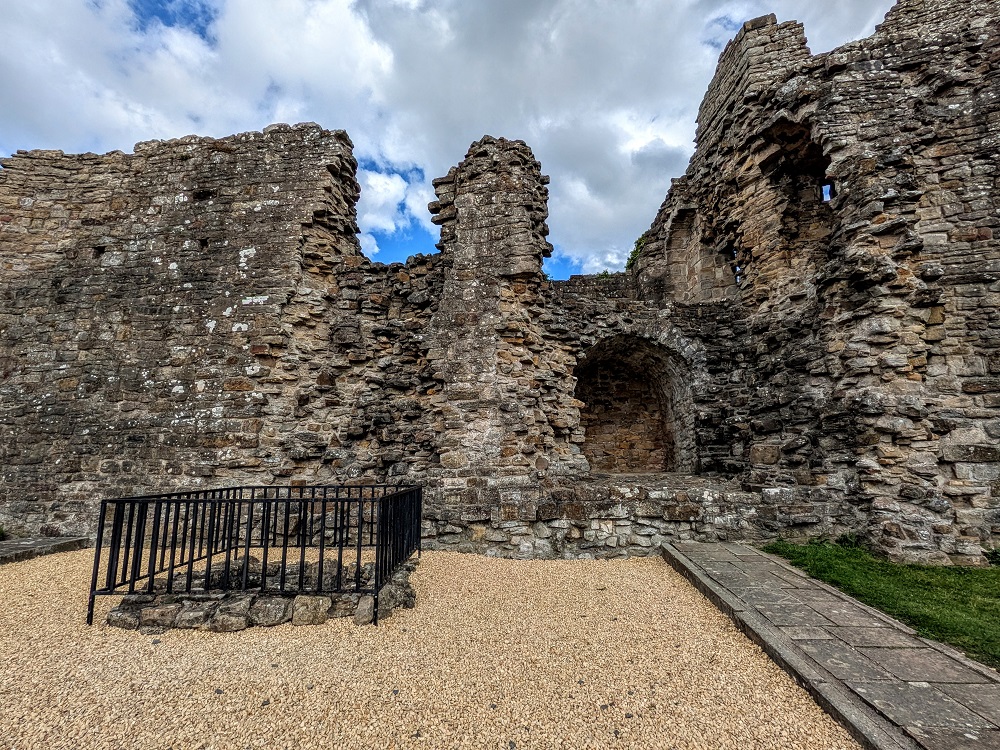
This was built away from the other main buildings in the Inner Ward to reduce the risk of fire spreading. There was a large oven, along with a stone-lined water cistern.
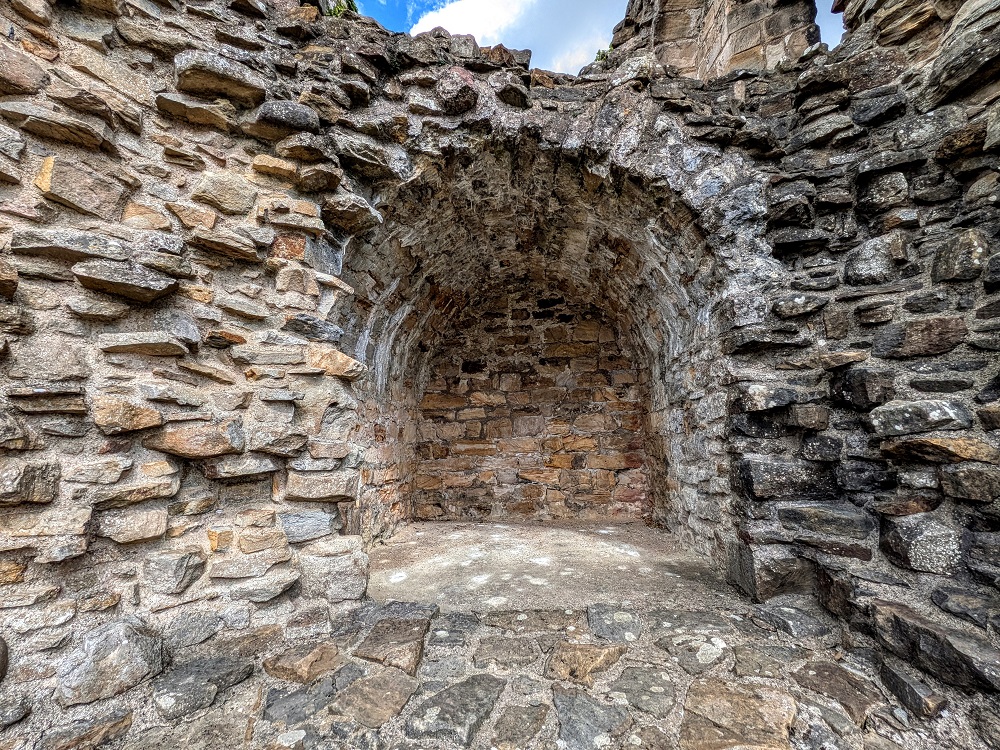
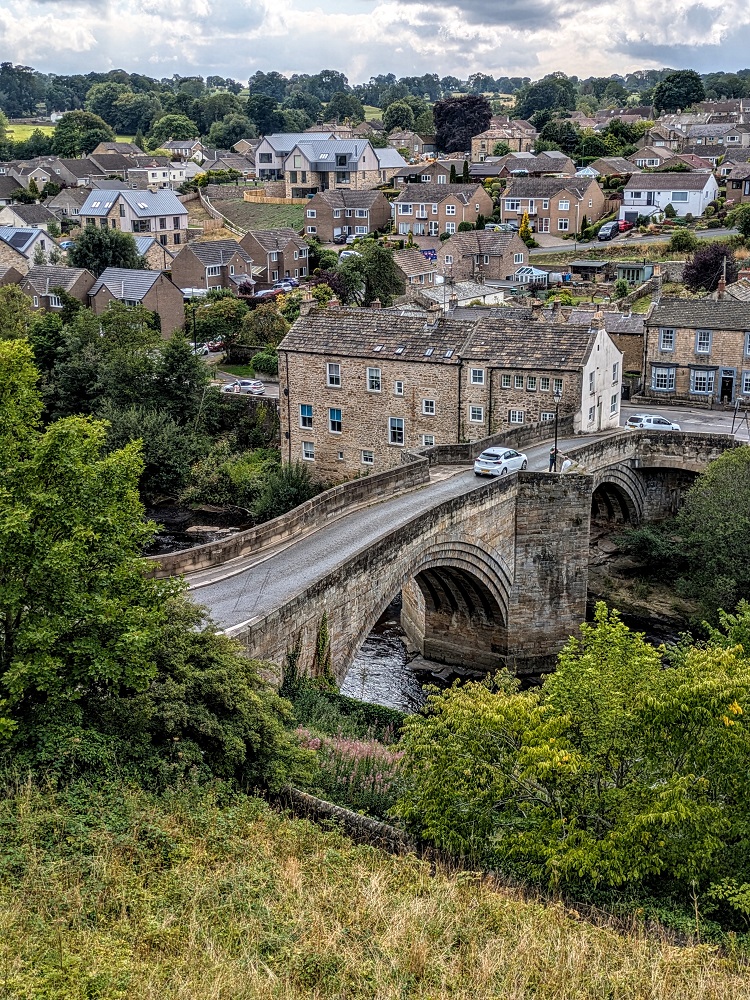
When walking back over the bridge from the Inner Ward to the Middle Ward, there’s a lovely view of County Bridge which crosses the River Tees. It’s also interesting seeing that the castle is still this high up in the town of Barnard Castle. That’s because when visiting the castle, you’ll likely drive down the main street running through town which makes it feel like the castle is at the bottom of a hill. Although it’s not located at the very top of the town, it does have a good elevated location above the river nonetheless.
The last part of the castle for us to check out was Dovecote Tower.
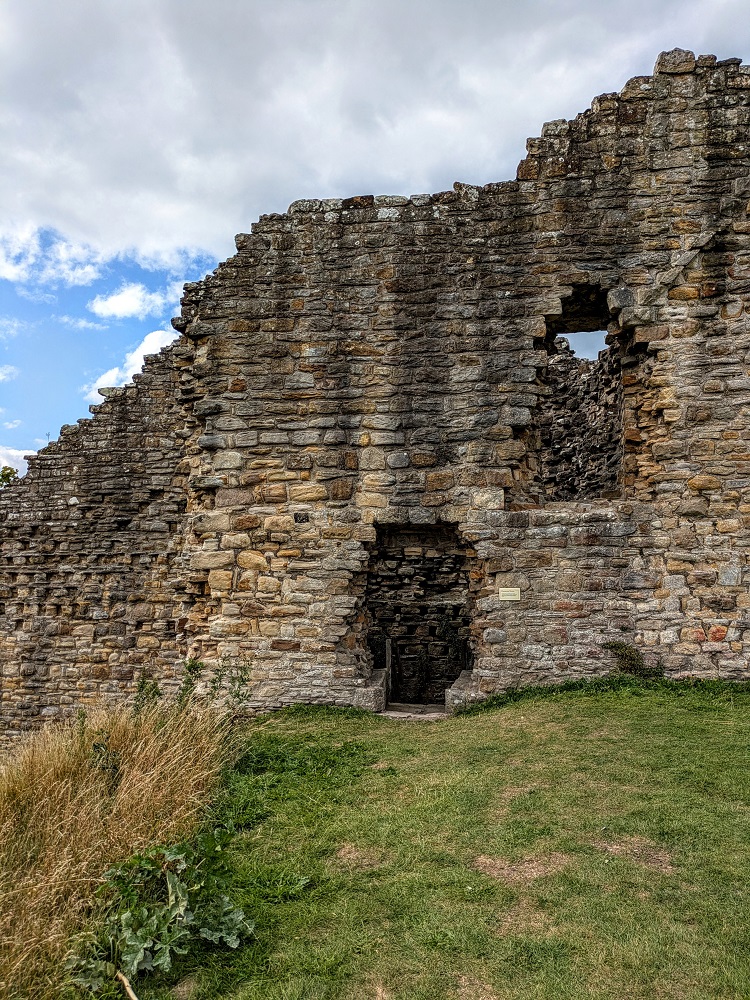
When approaching what remains of the tower, we noticed lots of large indentations in the wall to the left. It looked a little like the scaffolding indentations we’d seen in the wall above the Great Ditch earlier on, but it seemed strange that there’d be quite so many clustered together in the same place.
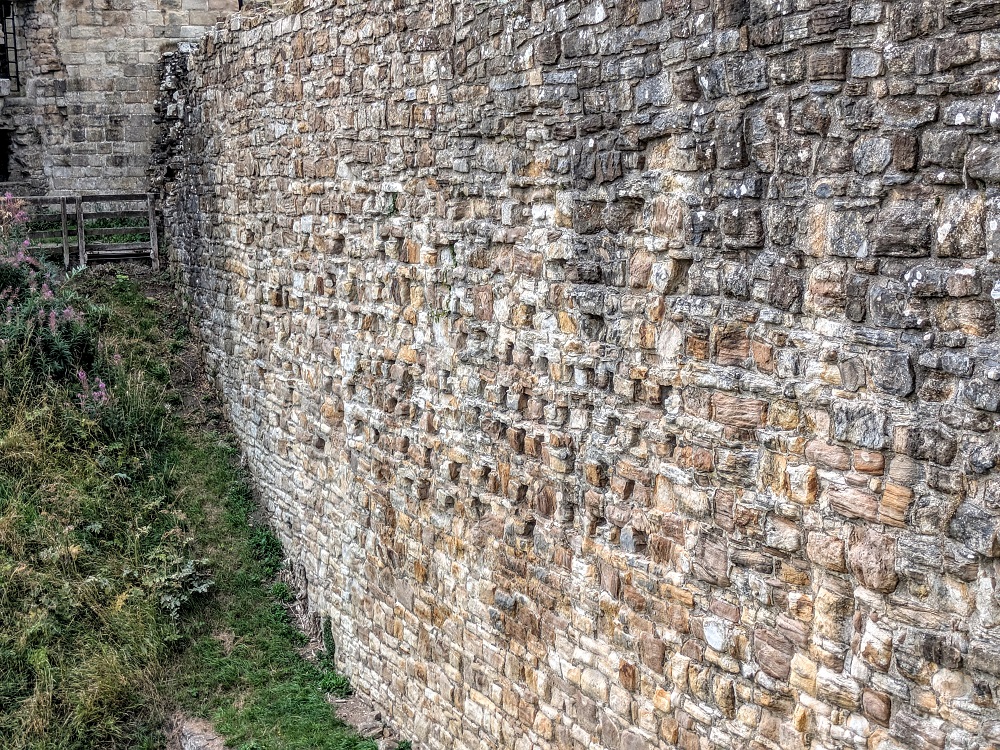
It turned out that these were nesting boxes for pigeons and doves, birds that were kept both for their eggs and as a meat source. There were additional nesting boxes inside the tower itself.
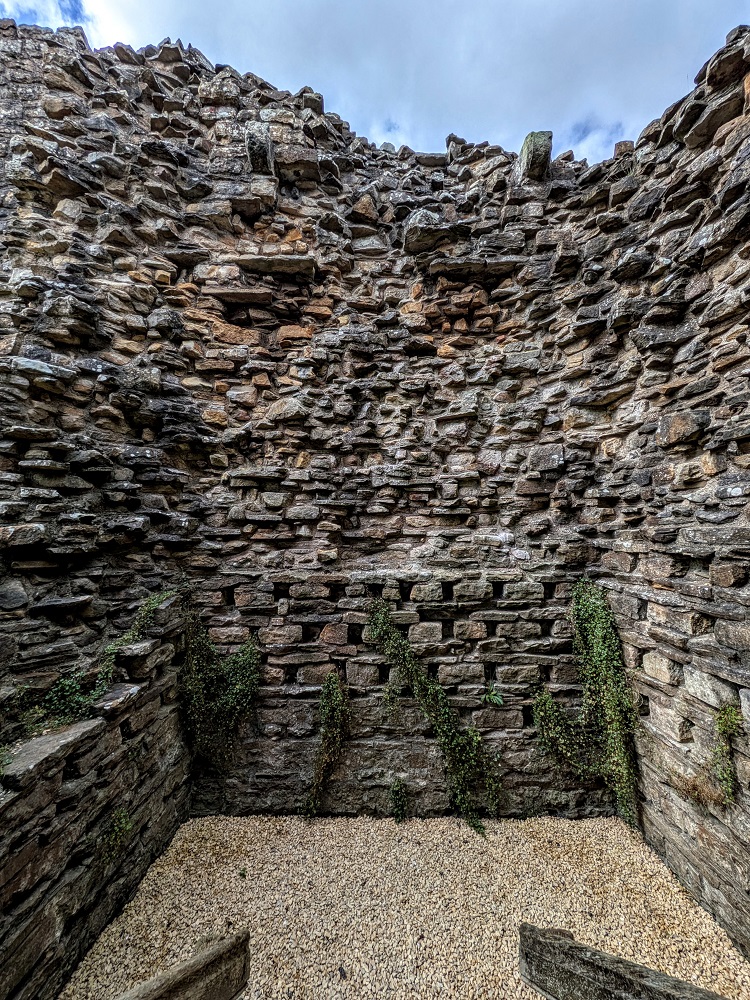
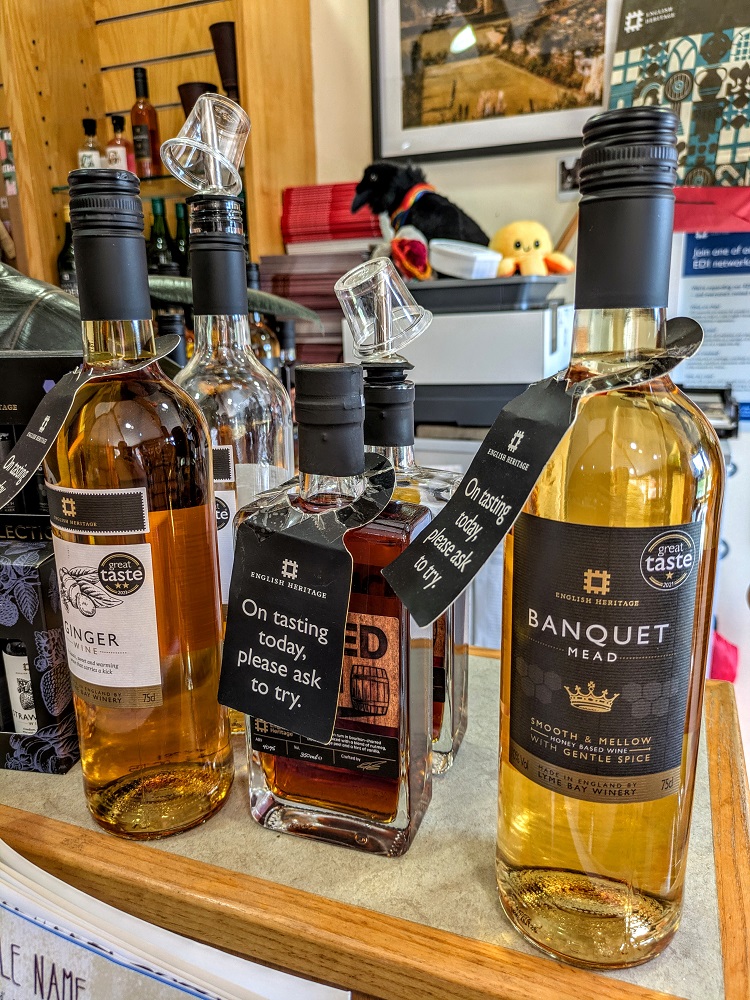
That was it for the main part of the castle, but we still had one more thing to do. When we arrived at the castle, we noticed a sign outside the gift shop that mentioned they offer free tastings of mead and wine. We always enjoy tastings like that, so we popped back inside with Truffles to try those.
There was a mead that was lightly spiced, a spiced rum and a ginger wine. The mead definitely had a distinctive honey flavor, but not overwhelmingly so and I enjoyed the spice that they’d added to it.
I really liked the spiced rum too, although Shae wasn’t as much of a fan of that one. I wasn’t expecting to like the ginger wine, but the ginger wasn’t overwhelming either, so it was surprisingly good. We ended up buying a bottle of the mead to take with us to celebrate as it was our anniversary.
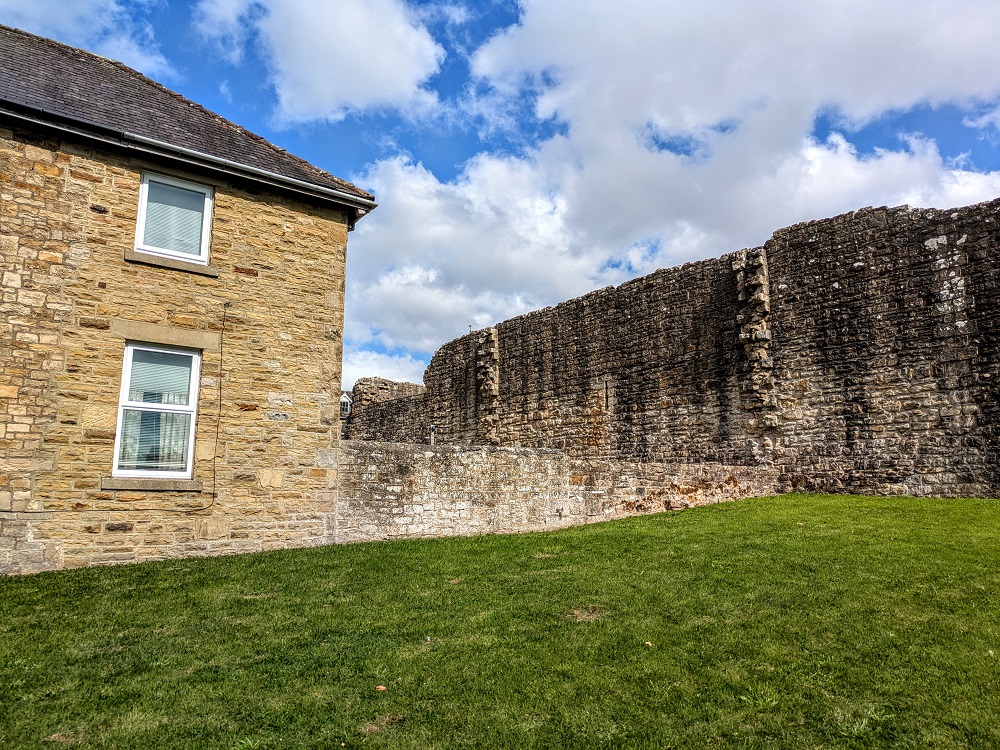
When leaving the castle, we noticed one of the houses right outside and said how fun it’d be to have the rear wall of your backyard be a castle wall that’s almost 1,000 years old!
Shae, Truffles and I spent about 1.5 hours wandering around Barnard Castle and had a great time. If you ever find yourself up in County Durham and fancy visiting a castle, this is a great option.
How Much Does It Cost To Visit Barnard Castle?
When we visited in August 2025, ticket prices for Barnard Castle when buying on the day were:
- Adult – £10
- Children (5-17 years old) – £5.40
- Students with student ID and over 65s – £8.60
- Family (2 adults + up to 3 children) – £25.40
- Family (1 adult + up to 3 children) – £15.40
If you buy a ticket online at least the day before your visit, you can get a decent discount:
- Adult – £8.10
- Children (5-17 years old) – £4.50
- Students with student ID and over 65s – £7.20
- Family (2 adults + up to 3 children) – £20.70
- Family (1 adult + up to 3 children) – £12.60
As I mentioned at the start of this post, Barnard Castle is run by English Heritage that takes care of hundreds of sites throughout England. There are quite a few English Heritage attractions near us now, so we decided to go ahead and get a full year’s membership which ordinarily costs £144 (~$194) for two people. Even better, English Heritage was offering a 25% discount by using promo code SUMMER25. That reduced the price to only £108 (~$145), or an effective £9 per month. That seemed like a decent deal, plus committing to the membership will hopefully give us even more incentive to get out and about to explore our local area.
Leave a Reply